English
Buying butt-weld fittings isn't just a price exercise—one wrong reducer specification can trigger fit-up delays, rework, or inspection failures on site. ASME B16.9 is the common dimensional standard for factory-made wrought butt-welding fittings, and procurement teams need to translate it into clear purchase requirements. In this guide, we'll explain how ASME B16.9 affects pipe reducer selection, how to choose between different reducer pipe types, and what to verify with your supplier before releasing a PO.
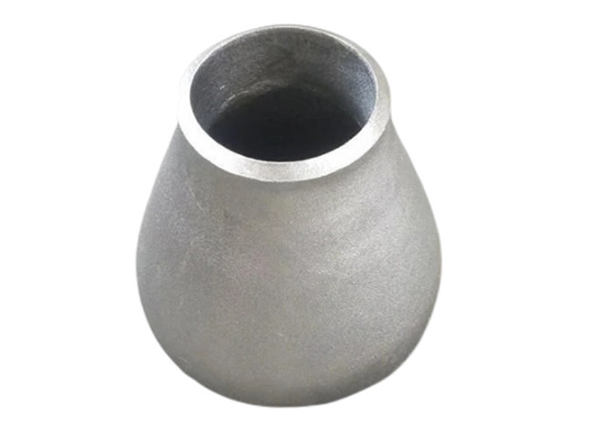
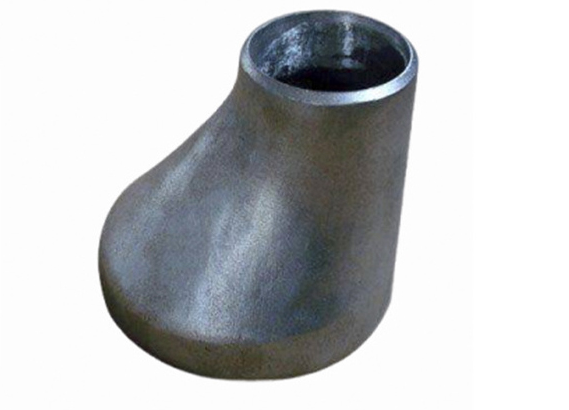
Concentric and eccentric pipe reducer types — ASME B16.9 butt-weld fittings for seamless piping systems
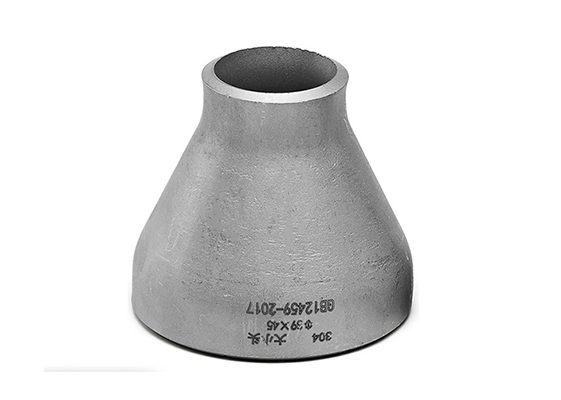
Understanding the two main reducer pipe types is the starting point for every purchase decision.
Concentric Reducer Both ends share the same centerline. The transition is symmetrical. Used in vertical piping runs and gas/vapor lines where symmetrical flow and drainage are not concerns.
Eccentric Reducer One side is flat; the centerline of the two ends is offset. Used in horizontal lines and pump suction lines where air pockets or drainage matter.
CONCENTRIC               ECCENTRIC
    ____                  ____
   /    \                 |    \
  /      \   ←centerline→ |     \
 /________\               |_______\
(symmetric)              (flat on one side)
Orientation rule for eccentric reducers:
Flat on Top (FOT): used on pump suction lines to prevent air entrainment
Flat on Bottom (FOB): used where self-draining is required
Projects will often call out FOT or FOB explicitly in their piping specifications. If your RFQ doesn't capture this, you may receive correct fittings installed in the wrong orientation—causing process problems that aren't obvious until commissioning.
ASME B16.9 defines the dimensional requirements for factory-made wrought butt-welding fittings—including pipe reducers of both types. Here's what procurement needs to understand:
What ASME B16.9 covers:
Overall length of the reducer
End-to-end dimensions by nominal pipe size (NPS)
Outside diameter and wall thickness at weld ends
Tolerances on dimensions and ovality
Weld end preparation (bevel angle reference)
What ASME B16.9 does NOT define:
Material grade (that's ASTM/ASME material standards, e.g., A234, A403)
Pressure rating (determined by material + wall thickness)
Inspection or testing requirements beyond dimensional
Surface treatment or coating
⚠️ Writing "ASME B16.9" on a PO is not a complete specification. You still need to add material grade, schedule, inspection level, and marking requirements.
✅ PO Line-Item Template
| Field | Example Entry |
|---|---|
| Fitting type | Eccentric Reducer, Flat on Top |
| Size | 6" × 4" NPS |
| Schedule | SCH 40 × SCH 40 |
| Material grade | ASTM A234 WPB |
| Dimensional standard | ASME B16.9 |
| End preparation | Beveled per ASME B16.25 |
| Quantity | 20 pcs |
| Required marking | Size, material, heat number, standard |
Wall thickness alignment is one of the most common—and costly—procurement errors with pipe reducers. The reducer must match the wall schedule of both the larger and smaller pipe it connects.
Key principle: A reducer is specified by two sizes and two schedules (large end × small end). These must correspond exactly to the upstream and downstream pipe wall thickness to ensure:
Correct weld fit-up at both ends
Consistent pressure rating through the transition
Acceptable bevel geometry for welding
Common procurement pitfalls:
| Pitfall | What Goes Wrong | How to Prevent |
|---|---|---|
| Single schedule specified for both ends | Wrong wall thickness at small end | Always specify schedule for each end separately |
| Schedule not confirmed against pipe list | Reducer OD/ID doesn't match pipe | Cross-check against project pipe material class |
| Bevel angle not specified | Welder receives incorrect end prep | Reference ASME B16.25 in PO |
| Tolerance not confirmed | Out-of-tolerance parts pass receiving | Request dimensional inspection report |
✅ Wall Thickness Compatibility Checklist
Large end OD and schedule confirmed against upstream pipe spec
Small end OD and schedule confirmed against downstream pipe spec
Both end bevel angles referenced (ASME B16.25 or project standard)
Any bore/ID requirements for flow calculations noted
Pipe material class document reviewed before PO issue
Even correctly specified reducer pipe types can cause problems if the documentation trail is incomplete. For any butt-weld fitting purchase, procurement should establish minimum documentation requirements upfront—not after delivery.
Documents to request from your supplier:
| Document | What It Confirms |
|---|---|
| Mill Test Report (MTR/MTC) | Chemical composition, mechanical properties, heat number |
| Heat number traceability | Links physical fitting to test certificate |
| Dimensional inspection report | Key dimensions checked against ASME B16.9 |
| NDT records | Required only if project spec calls for it (e.g., PMI, UT) |
Physical markings to verify on delivery:
NPS × NPS size marking on fitting body
Material grade and heat number stamped or ink-marked
Standard reference (e.g., "B16.9")
Schedule designation where applicable
✅ Receiving Inspection Mini-Checklist (for QC/Warehouse)
Count matches PO quantity
Size markings match PO description
Heat numbers present and legible
MTR received and heat numbers cross-checked
Bevel angle visually acceptable (no heavy nicks or damage)
No visible seams, laps, or surface cracks
Ovality within acceptable range (ends are round, not oval)
Correct reducer type (concentric vs eccentric) confirmed visually
A well-structured RFQ eliminates the most common back-and-forth delays. When buying pipe reducers, include these elements in every inquiry:
RFQ Must-Haves
Full size list: NPS × NPS for every reducer required
Both end schedules (not just one)
Material grade and applicable ASTM standard
Dimensional standard (ASME B16.9)
End preparation reference (ASME B16.25 or project-specific)
Required documentation (MTR, heat traceability, dimensional report)
Coating or painting requirements (bare, primed, or painted)
Packaging requirements (especially for export or offshore projects)
Required delivery date and Incoterms
Supplier Capability Signals to Evaluate
| Signal | What It Tells You |
|---|---|
| MTR provided with heat traceability | Supplier has proper documentation process |
| Consistent dimensional conformance history | Production quality is controlled |
| Packing method (end caps, moisture protection) | Supplier understands handling requirements |
| Lead time reliability (reference projects or delivery records) | Schedule risk is manageable |
| Responsive to technical clarifications | Engineering capability exists |
For procurement managers, pipe reducer buying success comes from specification clarity—not just referencing ASME B16.9. Choosing the correct reducer pipe type (concentric vs eccentric), matching wall thickness at both ends, specifying the right documentation, and giving suppliers a complete RFQ are the practical steps that prevent site delays and rework.
When your purchase package is complete, suppliers can quote faster, deliver on time, and provide fittings that install without surprises.
Q1: What's the difference between concentric and eccentric reducer pipe types?
A concentric reducer has both ends aligned on the same centerline—used in vertical runs and gas lines. An eccentric reducer has one flat side, offsetting the centerlines—used in horizontal lines and pump suction applications to control air pockets and drainage. The correct type is usually called out in the project piping specification.
Q2: Does ASME B16.9 specify material grade, or only dimensions for butt-weld fittings?
ASME B16.9 covers dimensional requirements only—lengths, outside diameters, tolerances, and weld end geometry. Material grade is specified separately through ASTM material standards (e.g., ASTM A234 for carbon steel fittings). A complete PO must reference both the dimensional standard and the applicable material specification.
Q3: How do I specify a pipe reducer on a PO (size, schedule, material, end prep)?
A complete PO line should include: fitting type (concentric or eccentric), size (large NPS × small NPS), schedule for each end, material grade and ASTM standard, dimensional standard (ASME B16.9), end preparation reference (typically ASME B16.25), required markings, and documentation requirements (MTR, heat traceability). Missing any of these fields commonly causes supplier clarification delays.
Q4: What documents should I request when purchasing reducers (MTR, heat numbers, inspection reports)?
At minimum, request a Mill Test Report (MTR) with heat number traceability linking each fitting to its test certificate, confirming chemical composition and mechanical properties. For critical service applications, also request a dimensional inspection report confirming conformance to ASME B16.9. NDT records (such as PMI or UT) should be requested only if your project specification requires them.
Q5: How do I prevent schedule mismatches when reducers connect two different pipe sizes?
Always specify the wall schedule independently for both the large end and the small end of the reducer. Cross-check both against your project pipe material class document before issuing the PO. A reducer specified as "SCH 40" without clarifying which end can result in the wrong wall thickness at one weld joint—causing fit-up problems or failing a weld inspection.