English
Most drilling budgets don't fail because the rig day rate is too high—they fail quietly through repeatable, invisible losses: stuck tools from unstable formations, slow penetration in collapsing intervals, unexpected caving during reaming, cementing rework, and premature well issues that turn into extra days on site. The fastest way to protect ROI is often not buying cheaper steel, but strategically sourcing the right casing pipe—and for water well projects, selecting the right steel casing pipe for borewell—so your total drilling cost per meter goes down, not just your purchase order.
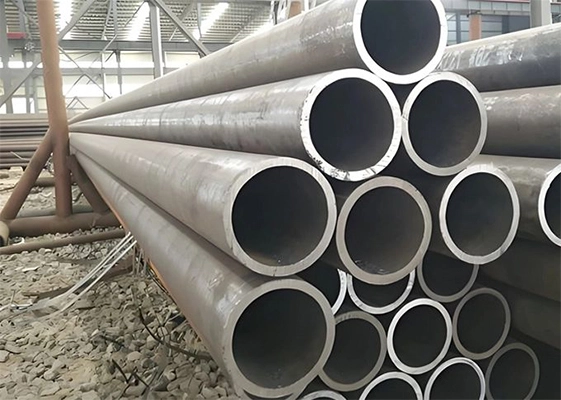
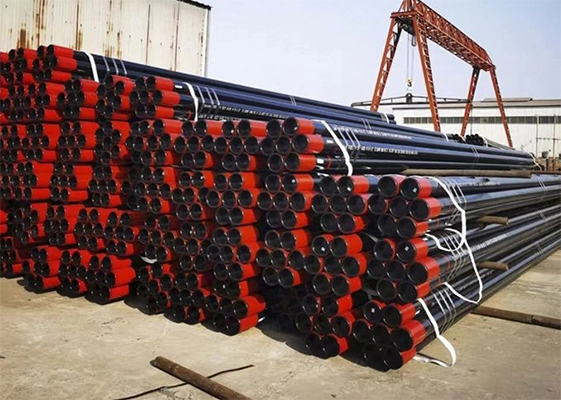
A casing pipe is the structural liner run inside a drilled wellbore to stabilize the formation, isolate pressure zones, prevent contamination between aquifers, and provide the mechanical foundation for completion equipment.
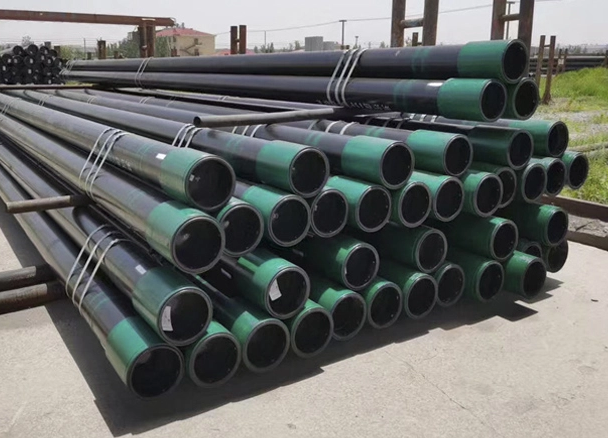
Where it sits in the drilling workflow:
Raw formation → drill to target depth → run casing → cement annulus → perforate or screen → produce or pump. Every step downstream of running casing depends on the casing performing exactly as designed. A casing that fails to hold formation pressure, collapses under overburden load, or leaks at a joint creates cascading costs that dwarf the original pipe purchase price.
The procurement mistake most teams make:
Comparing suppliers on unit price per meter or per ton while ignoring installed performance. The relevant number is total cost per successful well meter—which includes the casing purchase price plus any NPT (non-productive time), remediation, cementing rework, or re-drill cost that results from casing underperformance.
A casing pipe that costs 8% less but causes one additional day of rig time—at $5,000–$25,000 per day depending on the project—has a negative ROI before installation is complete.
Strategic sourcing of casing pipe works through three compounding ROI principles.
Wellbore instability is the largest single source of NPT in drilling operations. Correctly specified casing—appropriate collapse resistance for the formation pressure, adequate wall thickness for the depth and overburden, and correct grade for the stress regime—eliminates the failure modes that create stuck pipe, lost circulation, and hole enlargement events.
Every hour of NPT avoided is pure margin recovery. On a project with 20 wells per year, reducing average NPT by 4 hours per well at $8,000/day rig cost saves over $26,000 annually—from pipe specification discipline alone.
Thread fit-up speed, coupling reliability, and dimensional consistency directly affect running time. Casing strings that make up cleanly to torque specifications in predictable time reduce rig floor labor and tool usage. Pipe with tight OD/ID tolerances runs through the borehole without hanging or swabbing.
A casing string that requires two additional hours of running time per well, across 20 wells per year, consumes 40 rig hours—a material cost that never appears on the pipe purchase order.
Corrosion management, coating integrity, and thread sealing quality determine how long a well maintains its integrity. A steel casing pipe for borewell in a corrosive groundwater environment that fails prematurely forces either rehabilitation (expensive) or abandonment and re-drill (catastrophic to project economics).
Spec-first (define minimum performance requirements before pricing), supplier verification (confirm capability, not just claims), logistics protection (thread and coating damage during transport destroys field value), and batch consistency (performance must be repeatable, not just demonstrated on a first article).
Understanding what to specify—and what to verify—separates strategic sourcing from transactional purchasing.
Steel grade and chemistry:
API grades (J55, K55, N80, L80, P110) define minimum yield strength, tensile strength, and hardness limits. The grade determines collapse resistance, burst pressure rating, and tensile capacity. Verify with Mill Test Certificates (MTC) traceable to the specific heat number—not generic grade declarations.
For steel casing pipe for borewell applications, also verify sulfide stress cracking (SSC) resistance if H₂S is present in formation water, and confirm carbon equivalent for weldability if field welding is part of the installation method.
Wall thickness, OD/ID tolerances, and straightness:
API dimensional tolerances define acceptable ranges—but suppliers operating at the wide end of the tolerance band consistently will produce field problems. A 5% wall thickness under-tolerance on a 9-inch, 47 lb/ft casing reduces collapse resistance by approximately 15%—enough to matter in a collapsing formation.
Straightness affects both running performance (hanging tendency) and cementing quality (centralization). Specify and verify straightness for deep or directional applications.
Thread type, coupling quality, and thread protection:
API round thread (STC/LTC): standard, widely available, adequate for most water well and moderate-depth drilling applications
Buttress thread (BTC): higher tensile efficiency, better for deep or tension-loaded strings
Premium connections: proprietary thread forms offering metal-to-metal sealing and higher performance for demanding applications
Coupling quality is a separate variable from pipe quality—verify coupling grade, thread form, and make-up length independently. Thread protectors must be in place and undamaged on delivery; damaged threads on delivery translate to field rejection or makeshift repairs that compromise the joint.
Coatings, ends, markings, and packaging:
Internal coatings (epoxy, cement lining) extend service life in corrosive water environments. External coatings protect against atmospheric and soil corrosion during storage and service. Beveled ends in correct condition are required for welded installations. Clear heat/lot markings enable traceability in the field. Packaging that prevents pipe body contact and end damage during transport is a quality indicator, not a luxury.
Documentation bundle—what to request:
MTC (Mill Test Certificate) per heat/lot, traceable to API or equivalent standard
Dimensional inspection report: OD, wall thickness, weight, length, straightness
NDT records: hydrostatic test pressure, non-destructive examination results
Thread inspection report: thread form, taper, lead, height per coupling lot
Packing list with heat/lot cross-reference to physical bundles
Steel casing pipe for borewell selection requires matching material and design to the specific combination of depth, formation, and groundwater chemistry—not applying a single default specification to all projects.
Borewell operating reality:
Groundwater chemistry varies from benign fresh water to aggressive corrosive conditions (high chloride, low pH, dissolved CO₂ or H₂S)
Formation abrasion during installation (gravel, fractured rock) creates mechanical wear demands that softer materials cannot sustain
Depth determines collapse load—deeper borewells require higher yield strength grades or heavier wall specifications
Installation method (driven, rotary, cable tool) affects required mechanical properties and end condition
Comparison framework:
| Factor | Steel Casing (API Grade) | PVC/uPVC | Stainless Steel |
|---|---|---|---|
| Collapse resistance | High | Limited to shallow depths | High |
| Corrosion resistance | Requires coating/treatment | Inherent | Excellent |
| Installation durability | Excellent | Fragile in rocky formations | Good |
| Cost | Moderate | Low upfront | High |
| Service life (aggressive water) | Treatment-dependent | Good for compatible chemistry | Excellent |
| Thread/joint reliability | High (API standard) | Variable | High |
Best-fit selection matrix:
Shallow borewell, non-corrosive water, soft formation: lighter-wall steel or screened PVC adequate
Medium-depth borewell, moderate groundwater chemistry, mixed formation: API J55 or K55 steel with internal epoxy coating—steel casing pipe for borewell delivers best value
Deep borewell, aggressive chemistry, hard rock: N80 or L80 grade with full internal/external coating system; premium thread connections for reliability
High-corrosion aquifer (industrial contamination proximity): stainless steel or high-alloy steel justified by service life economics
Corrosion protection ROI:
Internal epoxy coating adds 3–8% to pipe cost and typically doubles effective service life in moderately corrosive conditions. The payback calculation: if the uncoated pipe requires rehabilitation or replacement in year 8 versus year 16 for the coated pipe, the coating cost recovers in avoided replacement cost within the first replacement cycle.
Industries where casing pipe strategic sourcing delivers measurable ROI:
Water wells and borewells: volume purchasing with consistent specification reduces batch variability and enables vendor qualification
Geothermal wells: high-temperature and corrosive fluid environments require verified material properties and sealing performance
Mining exploration and dewatering: remote locations amplify the cost of field rejection and emergency re-supply
Construction piling and ground improvement: dimensional consistency affects driving performance and structural load transfer
Tangible ROI benefits:
Lower NPT from reduced formation instability and running problems
Fewer field rejections from verified dimensional and thread quality
Reduced cementing risks from consistent OD and straightness
Longer service life in aggressive environments through appropriate coating and grade selection
Faster installation from reliable thread make-up and predictable pipe handling characteristics
Challenges to address directly:
"Same spec, different batch" variability: two shipments from the same supplier under the same API grade can differ significantly in actual dimensional performance if quality gates are not enforced. Require heat-traceable MTCs and independent dimensional reports per batch.
Hidden logistics damage: thread damage and coating damage during transport are among the most common sources of field rejection. Inspect end conditions and thread protectors at receiving before unloading is complete.
Lead-time volatility: steel mill lead times fluctuate with demand cycles. Build minimum buffer stock for active projects and confirm delivery schedule commitments in writing with penalty provisions.
Documentation gaps: a casing pipe without traceable documentation is a liability in any auditable project environment. Establish documentation requirements in the purchase order, not after shipment.
Actionable sourcing checklist:
Define application: depth, formation type, groundwater chemistry, installation method
Establish minimum performance specification: grade, wall thickness, OD tolerance, thread type, coating requirement
Qualify supplier: manufacturing capability, QA process, reference projects, inspection infrastructure
Specify pre-shipment inspection plan: dimensional sampling, thread gauge inspection, hydrostatic test witnessing (if required)
Define packaging and transport requirements: thread protectors, end caps, bundle separation, moisture protection
Establish receiving inspection steps: thread condition, OD/wall spot checks, marking verification, MTC cross-check
Confirm batch traceability: heat/lot numbers linked to physical bundles and shipping documents
On-site handling:
Use wide-cradle slings or pipe hooks—wire rope contact on pipe body causes surface damage that initiates corrosion
Never drop or drag pipe; impact damage on pipe ends distorts thread make-up geometry
Keep thread protectors in place until the moment of make-up; reinstall on any pipe returned to storage
Storage:
Store on timber dunnage, never direct ground contact—ground moisture accelerates corrosion initiation at pipe body contact points
Maintain end caps on all stored pipe; remove only immediately before use
Segregate by heat/lot number physically, not just on paperwork
Inspect stored pipe monthly for corrosion development, particularly at pipe ends and coupling faces
Installation basics:
Clean thread and coupling faces before make-up; apply thread compound per manufacturer specification and API make-up torque tables
Monitor make-up torque with calibrated equipment—under-torque causes leak paths; over-torque damages thread crests
Inspect each joint visually before stabbing; reject any joint showing thread damage, corrosion, or foreign material
Post-installation monitoring:
For borewell applications, annual water quality testing provides indirect evidence of casing integrity—changes in turbidity, iron content, or bacterial counts can indicate casing deterioration
Track pumping water levels versus historical baseline—significant changes can indicate formation entry through casing failures
In corrosive environments, pressure test integrity at defined service intervals for critical water supply wells
Strategic sourcing isn't about over-specifying—it's about buying a casing pipe that installs smoothly, performs predictably, and prevents expensive surprises. When your casing selection matches the formation, depth, and groundwater environment, you don't just save on materials—you compress timelines, reduce NPT, and protect the well's long-term integrity. For water well and borewell projects specifically, the right steel casing pipe for borewell specification—grade, coating, thread type, and documentation—is the single highest-leverage decision in the entire procurement process.
Ready to source smarter for your next project?
Visit the casing pipe product page and request a specification consultation or quotation. Share your project depth, formation profile, groundwater chemistry, required grade and dimensions, quantity forecast, and current sourcing challenges to receive a tailored recommendation.
Q1: How do I choose the right casing pipe size and wall thickness for my project?
Start from your depth target, formation collapse pressure, and overburden load. Select the API grade and wall thickness combination that provides adequate collapse resistance with a safety factor appropriate to your formation variability. For steel casing pipe for borewell projects, also factor in pump column size requirements and screen slot compatibility.
Q2: What should I check on delivery to avoid costly installation delays?
Inspect thread protectors and thread condition on every joint before unloading is complete. Spot-check OD, wall thickness, and straightness against the MTC. Verify heat/lot marking matches shipping documentation. Any pipe with damaged threads, dents in the thread zone, or missing documentation should be quarantined before it enters the yard stock for a casing pipe project.
Q3: Is steel casing pipe for borewell always better than other materials?
Not always. Steel casing pipe for borewell outperforms PVC in deep, rocky, or mechanically demanding formations. In shallow, soft-formation borewells with benign water chemistry, screened PVC may offer adequate performance at lower cost. The decision should be based on depth, formation abrasion, groundwater chemistry, and required service life—not default preference.
Q4: Which certifications or documents matter most when buying casing pipe?
The MTC (Mill Test Certificate) traceable to a specific heat number is the most critical document—it proves the material meets the claimed grade. Dimensional inspection reports confirm the pipe was measured, not just certified. Hydrostatic test records confirm pressure integrity. For casing pipe in regulated water supply applications, API 5CT compliance documentation and third-party inspection reports may also be required.
Q5: How do threads and couplings affect total drilling cost and ROI?
Thread quality determines make-up reliability, running speed, and joint sealing performance. Poor thread quality causes cross-threading, slow make-up, and premature joint failures that create NPT and potential well integrity issues. For casing pipe in deep or corrosive applications, premium thread connections with metal-to-metal sealing recover their cost premium within one avoided joint failure event.
Q6: What are common causes of casing pipe failure in borewells and how to prevent them?
The most common causes are corrosion from aggressive groundwater chemistry (prevent with appropriate coating and grade selection), mechanical damage during installation in rocky formations (prevent with adequate wall thickness and careful installation practice), and joint failures from improper make-up torque or damaged threads (prevent with thread inspection at receiving, calibrated torque equipment, and proper thread compound application). A correctly specified steel casing pipe for borewell with verified documentation and disciplined installation practice eliminates the majority of these failure modes.