English
Buying a pipe tee isn't just a size-and-price exercise — one wrong specification can trigger weld fit-up failures, inspection rejections, or process problems that don't surface until commissioning. In high-pressure industrial systems, the tee is the point where flow splits or combines, making it one of the highest-stress locations in any piping circuit. If you're sourcing from a pipe fitting tee supplier, this guide walks you through every decision layer: tee design, pressure class, material grade, connection type, standards compliance, and documentation — so you can build a complete purchase specification before releasing a PO.
Understanding the two main pipe tee designs is the starting point for every purchase decision.
Equal Tee All three openings share the same nominal pipe size. The branch carries the same diameter as the main run. Used in process headers, utility lines, and any circuit where branch flow demand matches the main line.
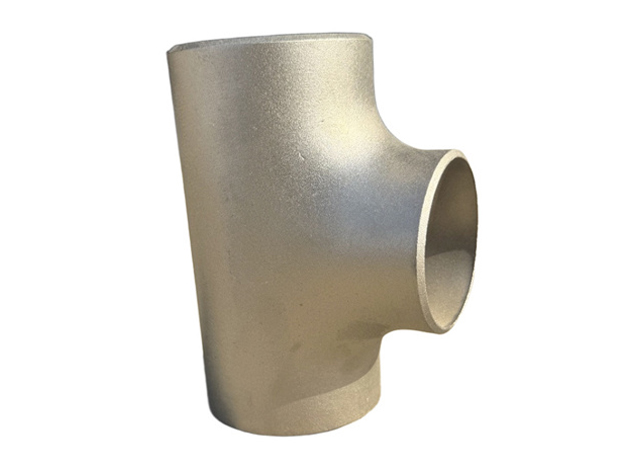
Reducing Tee The branch outlet is smaller than the main run. Used when pulling off a smaller side stream, connecting an instrument tap, or routing flow to a lower-capacity circuit. Using an equal tee where a reducing tee is technically required increases turbulence and stress concentration at the branch junction — a real fatigue risk in high-cycle or high-velocity service.
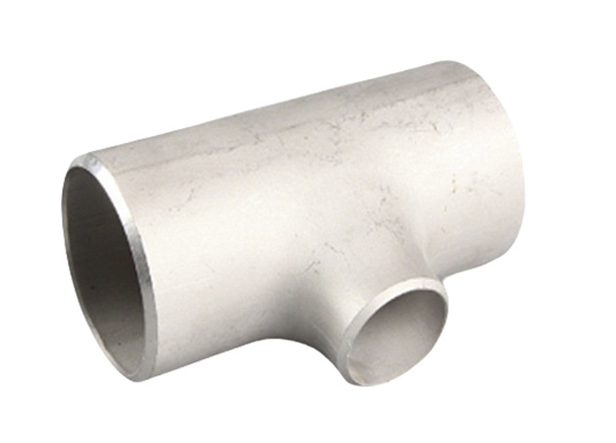
| Feature | Equal Pipe Tee | Reducing Pipe Tee |
|---|---|---|
| Branch Size | Same as main run | Smaller than main run |
| Typical Use | Process headers, utility systems | Side streams, instrument taps, smaller branch circuits |
| Stress Concentration | Moderate | Lower when branch is proportionate to flow |
| Flow Turbulence Risk | Standard | Reduced when correctly sized |
| Common Services | Water injection, steam, general process | Reduced branch circuits, instrumentation |
Pressure Class Quick Reference
| ASME Class | Approx. Max Pressure (Carbon Steel, 100°F) | Typical Service |
|---|---|---|
| Class 300 | ~740 psi | General process lines |
| Class 600 | ~1,480 psi | High-pressure hydrocarbon |
| Class 900 | ~2,220 psi | Critical high-pressure service |
| Class 1500 | ~3,705 psi | Very high-pressure process |
| Class 2500 | ~6,170 psi | Extreme-pressure specialty service |
⚠️ Wall thickness and schedule must match the adjacent pipe at both the run ends and the branch. A schedule mismatch creates a weak point regardless of the pressure class specified.
✅ Tee Design Buying Checklist
Equal or reducing tee confirmed against branch flow requirement
Branch NPS and schedule confirmed against downstream pipe spec
Pressure class selected to meet MAWP with safety margin
Wall thickness at crotch (thinnest point) checked against code minimum
Material selection is driven by three intersecting factors: the pressure and temperature envelope, the corrosive nature of the process media, and any special environmental conditions such as low-temperature operation or hydrogen exposure.
| Material | Typical Grade | Temp Range | Best For | Key Risk |
|---|---|---|---|---|
| Carbon Steel | ASTM A234 WPB/WPC | -20°F to 800°F | General hydrocarbon, steam, utilities | Low-temp toughness below -20°F |
| Low-Temp Carbon Steel | ASTM A420 WPL6 | Down to -50°F | Cold climate, cryogenic service | Impact test certification required |
| Stainless Steel | ASTM A403 WP304L / WP316L | -425°F to 1500°F | Corrosive media, seawater, pharma | Chloride stress corrosion cracking |
| Duplex / Super Duplex | UNS S31803 / S32750 | -50°F to 600°F | Offshore, high-chloride environments | Strict heat treatment control required |
| Chrome-Moly Alloy | ASTM A234 WP11 / WP22 | Up to 1100°F+ | High-temp refinery, power generation | Creep risk at extreme temperatures |
| Sour Service | NACE MR175 compliant grades | Varies | H₂S-containing environments | Sulfide stress cracking if non-compliant |
Common material selection mistakes in high-pressure tee procurement:
| Pitfall | What Goes Wrong | How to Prevent |
|---|---|---|
| Standard carbon steel ordered for low-temp service | Brittle fracture risk below -20°F | Specify WPL6 and request impact test records |
| 304 stainless used in high-chloride service | Pitting and stress corrosion cracking | Upgrade to 316L, duplex, or super duplex |
| No NACE compliance check for sour service | Sulfide stress cracking in H₂S environment | Confirm NACE MR0175 / ISO 15156 compliance upfront |
| MTC not requested at order stage | No traceability if material is queried on site | Make EN 10204 3.1 MTC a mandatory PO requirement |
What to request from your pipe fitting tee supplier on material documentation:
MTC to EN 10204 3.1 as standard minimum; 3.2 for third-party witnessed inspection
Full heat-number traceability linking each tee to its test certificate
Chemical composition and mechanical test results on the certificate
NACE compliance statement for any sour service order
The connection type defines how the tee integrates into the piping system and directly determines joint integrity under pressure.
BUTT WELD TEE          SOCKET WELD TEE        THREADED TEE
  ___________            ___________            ___________
 |     |     |          |     |     |          |     |     |
 | ----+---- |          | ----+---- |          | ----+---- |
 |_____|_____|          |_____|_____|          |_____|_____|
  Full penetration       Fillet weld            Mechanical
  weld both ends         socket joint           thread joint
  (highest integrity)    (crevice risk)         (leak risk)
| Connection Type | Standard | Size Range | Pressure Suitability | Main Limitation |
|---|---|---|---|---|
| Butt Weld (BW) | ASME B16.9 | 1/2"–48" NPS | Excellent — all pressure classes | Requires qualified welders + WPS/PQR |
| Socket Weld (SW) | ASME B16.11 | 1/8"–2" NPS | Good — Class 3000/6000 | Internal crevice; avoid corrosive/cyclic service |
| Threaded (NPT) | ASME B16.11 | 1/8"–4" NPS | Limited — utility/non-critical only | Leak risk under vibration and thermal cycling |
Butt weld tees are the standard choice for high-pressure and critical-service pipelines. The full-penetration weld creates a joint as strong as the pipe itself with no mechanical crevice — giving it the best leak resistance and fatigue performance of the three types. Post-weld NDT (RT or UT on critical joints) is essential and should be planned into the installation scope.
Socket weld tees suit smaller sizes in moderate-pressure, non-corrosive service. The socket creates an internal crevice that can trap corrosive media and initiate pitting. Not recommended for highly corrosive, cryogenic, or high-pressure cyclic applications.
Threaded tees are the easiest to install but the most vulnerable under demanding conditions. Thread roots concentrate stress, and joints can loosen under vibration or thermal cycling. Restrict to low-pressure utility lines and non-hazardous service only.
✅ Connection Type Selection Checklist
Butt weld specified for Class 600 and above, or any hazardous/critical service
Socket weld limited to 2" NPS and below, non-corrosive, non-cyclic service only
Threaded connections restricted to utility or instrument service, non-critical duty
WPS/PQR qualification confirmed for butt weld installation
NDT scope defined (RT/UT for critical welds)
Specifying the right standard is how you legally and technically define what you are buying. Writing "ASME B16.9" on a PO is not a complete specification — you still need material grade, schedule, inspection level, and marking requirements.
Key Standards Reference
| Standard | What It Covers |
|---|---|
| ASME B16.9 | Dimensions for butt-weld fittings, 1/2"–48" NPS |
| ASME B16.11 | Socket weld and threaded forged fittings |
| ASME B16.25 | Weld end preparation geometry |
| ASTM A234 | Carbon and alloy steel wrought fittings (WPB, WP11, WP22) |
| ASTM A403 | Stainless steel wrought fittings (WP304L, WP316L) |
| ASTM A815 | Duplex and super duplex wrought fittings |
| NACE MR0175 / ISO 15156 | Sour service material requirements |
| EN 10204 3.1 / 3.2 | Inspection certificate types |
QA/QC Checklist — What to Confirm with Your Pipe Fitting Tee Supplier
| Inspection Item | Method | What It Confirms |
|---|---|---|
| Visual + Dimensional | Manual / gauges | OD, wall thickness, center-to-face, bore, surface finish |
| PMI | XRF or OES | Chemical composition matches ordered grade |
| Magnetic Particle (MT) | Wet/dry MT | Surface cracks in ferromagnetic materials |
| Liquid Penetrant (PT) | Dye penetrant | Surface defects in non-ferromagnetic materials |
| Ultrasonic Testing (UT) | Pulse-echo | Wall thickness at crotch, volumetric flaws |
| Radiographic Testing (RT) | X-ray / gamma | Weld integrity after installation |
| Hydrostatic Test | Pressure hold | Integrity under test pressure (on request) |
| MTC Review | Document check | Material compliance, heat traceability |
Ask your pipe fitting tee supplier which inspections are included as standard delivery and which require additional cost or lead time — before the PO is issued, not after.
A complete purchase specification eliminates the most common back-and-forth delays. Every field below should be confirmed before releasing a PO.
✅ PO Specification Template
| Field | Example Entry |
|---|---|
| Fitting Type | Equal Tee / Reducing Tee |
| Main Run Size (NPS) | 6" NPS |
| Branch Size (NPS) | 4" NPS (for reducing tee) |
| Schedule / Wall Thickness | SCH 80 (run) × SCH 80 (branch) |
| End Type | BW beveled per ASME B16.25 |
| Material Grade | ASTM A234 WPB |
| Pressure Class / Standard | Class 600 / ASME B16.9 |
| Surface Treatment | Black paint / hot-dip galvanized |
| Required Marking | Size, grade, heat number, standard |
| Documentation Required | EN 10204 3.1 MTC + dimensional report |
| Packing | Plywood case, PE end caps |
| Quantity | 30 pcs |
"Before PO" Questions for Your Pipe Fitting Tee Supplier
| Question | Why It Matters |
|---|---|
| Can you supply matching elbows, reducers, and flanges from the same heat? | Lot consistency simplifies traceability and on-site weld procedure management |
| What certificates come standard, and what costs extra? | Sets your documentation baseline before commitment |
| What is your realistic lead time for this grade, size, and quantity? | Stock items ship in days; specialty alloys may need 4–12 weeks |
| What is your MOQ and export packing capability? | Critical for international project logistics and fumigation requirements |
| Can you provide third-party inspection (EN 10204 3.2) if required? | Required for many EPC and oil and gas project specifications |
A reliable pipe fitting tee supplier will answer every question in this table clearly and in writing. Vague responses on documentation scope and lead time are early warning signs worth taking seriously before a purchase order is committed.
For procurement managers, pipe tee buying success comes from specification clarity — not just referencing a standard. Choosing the correct tee design (equal vs. reducing), matching wall schedule at every end, selecting the right material for the operating environment, specifying the correct connection type, and giving suppliers a complete RFQ are the practical steps that prevent site delays and rework.
When your purchase package is complete, your pipe fitting tee supplier can quote faster, manufacture to the right spec, and deliver fittings that install without surprises.
Q1: What is the difference between an equal pipe tee and a reducing pipe tee?
An equal tee has the same nominal diameter on all three openings — both run ends and the branch outlet. A reducing tee has a smaller branch outlet to connect a smaller pipe or instrument line. The choice depends on branch flow requirement and the pipe sizes in your system. Using an equal tee where a reducing tee is required increases turbulence and stress at the branch junction.
Q2: Which pipe tee end type is best for high-pressure service?
Butt weld tees are the standard choice for high-pressure and critical-service applications. A full-penetration butt weld creates a joint as strong as the pipe itself, with no mechanical crevice and excellent resistance to leakage under cyclic pressure and vibration. Socket weld and threaded tees are acceptable only for smaller sizes and non-critical duties.
Q3: What documents should a pipe fitting tee supplier provide for industrial projects?
At minimum: a Material Test Certificate (MTC) to EN 10204 3.1, dimensional inspection records confirming ASME B16.9 conformance, and a packing list with heat numbers cross-referenced to each item. For critical or high-pressure service, also request PMI reports, NDT records, and third-party inspection certificates to EN 10204 3.2 where required by your project specification.
Q4: How do I confirm a pipe tee meets the required pressure rating?
Verify the ASME pressure class, material grade, and schedule against the pressure-temperature tables in ASME B16.9 or B16.5 for your operating conditions. The tee must be rated above your maximum allowable working pressure at the design temperature, with no exceedances at any transient operating condition.
Q5: Can threaded pipe tees be used in high-pressure pipelines?
Only in limited cases — small-bore instrument connections or low-risk utility lines. Threaded joints are prone to leaking under vibration and thermal cycling, and most industrial codes restrict them to small diameters in non-hazardous service. For high-pressure critical lines, butt weld tees are the correct choice.