English
For oil & gas, power, and industrial projects, material selection isn’t just about price—it’s about proven performance under pressure, temperature, and long service life. That’s why top seamless pipe manufacturers treat API 5L and ASTM A106 as non‑negotiable baselines for qualification, documentation, and inspection. In this article, we’ll explain what these standards cover, how they protect project risk, and what to look for when sourcing seamless casing and related seamless steel pipes.
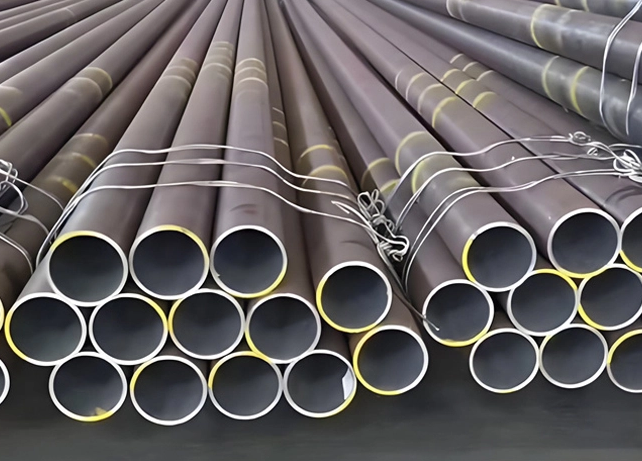
These standards act like a common language for specs, testing, and acceptance in procurement. Top seamless pipe manufacturers use them to demonstrate reliability and consistency.
API 5L is for seamless/welded steel line pipe used in pipeline transportation for oil and natural gas.
ASTM A106 covers seamless carbon steel pipe intended for high‑temperature service.
Standards-at-a-glance:
| Standard | Typical Service | What it Controls (Chemistry/Tests/Documentation) |
|---|---|---|
| API 5L | Oil/gas pipelines | PSL levels, chemistry, hydrotest, Charpy impact |
| ASTM A106 | High-temp service | C-Si-Mn limits, tensile strength, flattening test |
Seamless casing is preferred for demanding service because it has no weld seam, ensuring consistent wall thickness and structure for better pressure integrity.
Buyers confirm in mill docs: heat/lot traceability, chemistry limits (e.g., C ≤.30%), tensile/yield strength, NDT (ultrasonic), and hydrotest. Weak documentation leads to rejections, delays, and re-testing costs.
Mill Test Report (MTR) Checklist:
Heat number and full traceability chain.
Chemical analysis vs. standard limits.
Mechanical properties (yield, tensile, elongation).
NDT and hydrotest results with signatures.
Dimensions, weight, and visual inspection notes.
Simple decision logic:
For pipeline transportation projects → API 5L is typically referenced.
For high-temperature service → ASTM A106 is commonly specified.
Correct selection prevents mismatches like wrong grade, testing, or acceptance criteria.
Questions to Ask Your Supplier:
What’s the service medium, temperature, and pressure?
Required size, wall thickness, and quantity?
Delivery schedule and third-party inspection needs?
For seamless casing, verify manufacturing basics: process route (piercing, rolling, heat treatment), dimensional control (OD tolerance ±.5%), and inspection steps (100% UT).
Quality indicators: ISO 9001 QA, consistent records, third-party readiness. Logistics: lead time (8-12 weeks), seaworthy packing, clear markings, support.
Red Flags:
Vague test claims without sample MTRs.
No heat traceability.
Unclear standards compliance on quotation.
API 5L and ASTM A106 matter because they reduce ambiguity in how pipes are made, tested, and accepted—helping projects avoid preventable failures, rejections, and schedule risk.
API 5L vs ASTM A106: what’s the main difference for buyers? API 5L focuses on pipeline toughness; ASTM A106 on high-temp creep resistance.
Can seamless casing be supplied to API 5L requirements? What documents prove compliance?
Yes; MTRs, hydrotest certs, NDT reports, and PSL1/2 declarations.
What tests are commonly associated with ASTM A106 seamless pipe for high-temperature service? Tensile, yield, elongation, flattening, bend, and optional hydro.
What should I check on an MTR when sourcing seamless casing?
Chemistry, mechanicals, dimensions, NDT/hydro results vs. specs.
How do seamless pipe manufacturers control consistency across batches (traceability and inspection)?
Heat/lot tracing, automated UT/dimensional checks, statistical QA.