English
In 2026, groundwater extraction isn’t just about drilling deeper—it’s about drilling smarter. A poorly installed slotted tube well can trigger early pump sanding, rapid clogging, and loss of yield within months. Procurement managers and field engineers are increasingly specifying precision slotted well screens (often laser-cut) because they deliver predictable sand control, better hydraulic performance, and longer service life than older “punched/perforated” approaches.
E‑E‑A‑T note: JRSK has 20+ years of experience manufacturing API-grade casing and engineered slotted pipes for water and industrial wells. This guide summarizes installation best practices you can apply on real projects—whether you’re specifying J55/N80 carbon steel screens for depth or stainless steel for corrosive formations.
Perforated pipes can work, but they often introduce variability: uneven open area, burrs, and inconsistent hole geometry that accelerates clogging and encourages localized sand entry. Modern slotted tube well design focuses on:
Hydraulic efficiency: higher effective open area supports lower entrance velocity and reduced drawdown.
Formation protection: correct slot width + correct filter pack can reduce fines migration and pump sanding.
Predictability: precision slotting (e.g., laser-cut) reduces burrs and sharp edges that trap biofilm and scale.
If you’re comparing designs or preparing a specification package, start with the product engineering data and slot range available from the manufacturer. For example, JRSK publishes slot width options (commonly 0.2 mm to 3 mm) and other technical specifications here: JRSK Slotted Pipes.
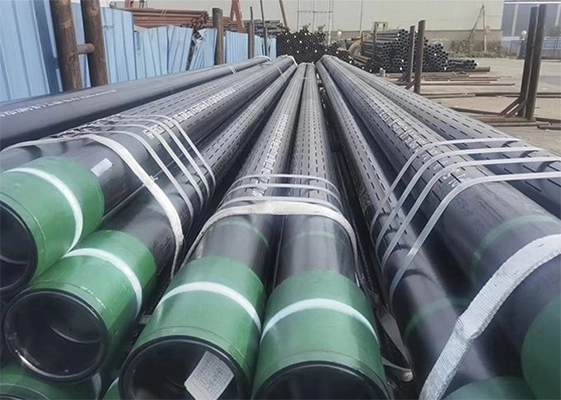
Your screen material choice should match depth, mechanical loading, and groundwater chemistry.
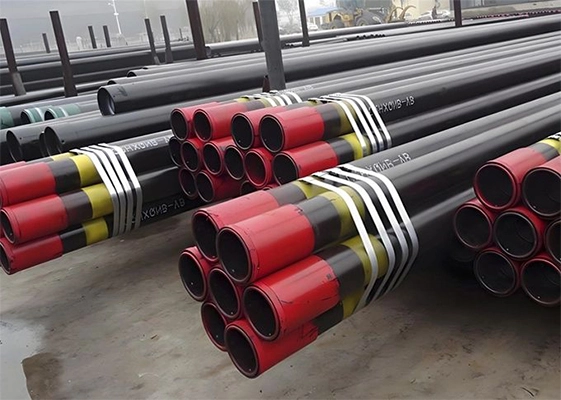
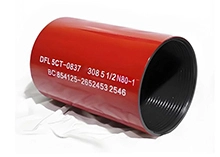
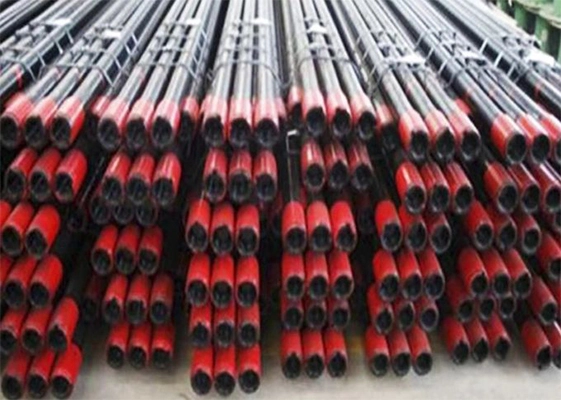
Carbon steel (J55, N80): commonly specified where strength and cost efficiency matter—especially in deeper wells or formations with higher collapse risk. N80 is often selected when additional strength margin is required.
Stainless steel: preferred in corrosive environments (chlorides, aggressive CO₂ conditions, certain industrial groundwater profiles) where lifecycle cost is driven by corrosion resistance rather than initial price.
Procurement tip: Ask for mill test certificates (MTCs), dimensional tolerances, and any coating/anti-corrosion system documentation—then align those with your project’s groundwater analysis and expected service life.
Slot geometry affects strength, open area distribution, and clogging behavior:
Longitudinal slots: straightforward, commonly used for predictable sand retention when combined with a proper filter pack.
Spiral slots: can provide more uniform inflow distribution along the circumference and length, supporting smoother hydraulic performance.
Bridge slots: designed to help resist plugging and maintain flow paths—often chosen for challenging formations.
In 2026, many specifications explicitly require smooth, burr-free slot edges because rough edges:
trap fines and biofilm (accelerating biofouling),
create nucleation points for incrustation/scale,
increase turbulence at the screen face (raising entrance velocity and sanding risk).
Laser-cut slotting is frequently used to minimize burrs and deliver consistent slot width along the screen section—particularly important when you’re targeting a narrow slot tolerance band for fine sand control.
Before finalizing slot width, you need formation data (or at minimum, representative samples). The practical workflow is:
Collect cuttings/samples by depth interval where the screen will be set.
Run sieve analysis to determine grain-size distribution (D10, D30, D50, D60).
Select a screen-slot and filter-pack strategy together—treat them as one engineered system, not two separate purchases.
Common industrial rule-of-thumb: choose slot width to retain a target fraction of the filter pack (often stated as retaining 40–60% of the pack material). For sand wells, many field teams avoid oversizing slots when formation grains are fine or highly uniform because it increases sanding sensitivity after development.
Most designs transition from solid casing (for structural integrity and aquifer isolation) to the slotted “screen” section across the producing zone. Key best practices:
Keep the screen interval aligned to the target aquifer thickness (avoid screening into unstable clay layers where possible).
Use proper connectors and thread protection to prevent damage during make-up and running.
Confirm collapse and tensile design for the installation loads (running weight, drag, differential pressure, potential formation squeeze).
Centralizers aren’t optional if you want a uniform annulus and even gravel pack placement. When the screen lies against the borehole wall:
the pack bridges on the tight side,
you get uneven inflow, localized high entrance velocity,
and sanding/clogging risk increases.
2026 installation standard mindset: centralize for uniform annulus, then pack for uniform permeability—this is how you protect borehole integrity and screen performance at the same time.
A high-open-area screen only performs if the surrounding pack is correctly sized and correctly placed.
Choose pack gradation based on formation sieve data and your slot selection method.
Place pack slowly and continuously to avoid segregation (coarse grains dropping faster than fines).
Verify top-of-pack depth (tagging methods, volume calculations, and/or downhole verification where feasible).
Engineering lens: your goal is to maintain laminar inflow at the screen face (lower entrance velocity) and stable filtration in the annulus (pack that doesn’t migrate or bridge).
Typical cause: slots too large for the formation/pack combination, poor development, or an uneven annulus due to poor centralization.
Mitigation checklist:
Re-check sieve data and confirm slot width logic (formation + pack + development method).
Confirm the gravel pack reached full design height and didn’t bridge.
Use development techniques appropriate to the formation (e.g., surging/airlifting where suitable) to stabilize the pack and remove fines.
Typical cause: rough slot edges, high entrance velocity, aggressive groundwater chemistry, or inadequate corrosion protection.
2026 best practice trend: more projects specify anti-corrosion systems and tighter QA on slot finish (burr control) because remediation is expensive once the screen is downhole.
Typical cause: under-designed casing grade for the formation stress profile, improper running practices, or unexpected formation movement.
Mitigation checklist:
Re-validate collapse/tension design (often where higher-strength grades like N80 are considered).
Confirm borehole stability plan (mud properties, reaming practices, time open-hole is left unsupported).
Check handling and running procedures to avoid impact damage.
When a slotted tube well screen provides higher effective open area and consistent slot geometry, you typically see:
lower drawdown for a given flow rate,
reduced pump energy consumption over the well’s operating life,
less abrasive wear (when sand control is working).
For high-duty industrial wells, those gains translate into measurable ROI: fewer interventions, longer pump life, and more stable production.
Environmental compliance increasingly emphasizes preventing aquifer cross-contamination and maintaining borehole integrity. That means tighter attention to:
annular sealing and isolation across non-producing intervals,
materials compatibility (corrosion risk management),
documentation of installation QA/QC and traceability.
Best practice: slot size depends on the formation’s grain-size distribution and your filter pack selection. A common engineering approach is choosing a slot width that retains roughly 40–60% of the filter pack material. For fine sand control, precision slot ranges can be as tight as 0.2 mm (manufacturer-dependent). Always confirm with sieve analysis and pumping/development goals.
Often yes for demanding projects: laser-cut slots can deliver more consistent slot width and smoother edges, which helps reduce early clogging and improves predictable sand control—especially when your design depends on tight tolerances.
In many sand formations, yes. The gravel pack and slot size work together as a filtration system. Some formations can be naturally developed without a pack, but that decision should be made from grain-size data and stability considerations—not habit.