English
In 2026, industrial buyers managing pipeline projects, structural construction programs, water transmission systems, and oil and gas infrastructure face a procurement environment defined by cost pressure, tighter delivery windows, and the need to demonstrate value engineering without compromising system reliability. In this environment, the traditional default of specifying seamless pipe for every application — regardless of whether the service conditions actually require it — is being challenged by a technically informed question that more procurement teams and project engineers are asking: has modern electric resistance welded pipe technology advanced to the point where ERW pipe can reliably replace seamless pipe in a broader range of applications, delivering equivalent performance at meaningfully lower cost?
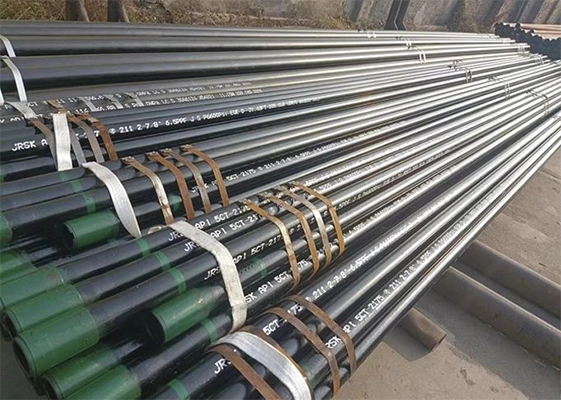
The answer, for a growing range of low-to-medium pressure oil and gas, water transmission, structural, mechanical, and industrial applications, is yes — provided that the ERW pipe is manufactured using modern high-frequency welding technology, subjected to appropriate weld seam heat treatment, and verified through non-destructive testing, hydrostatic testing, and dimensional inspection. JRSK describes ERW steel pipe as Electric Resistance Welded steel pipe made by rolling steel strip into a cylindrical shape and welding the longitudinal seam with high-frequency electric current, offering strength, durability, and cost-effectiveness for fluid, gas, oil, natural gas, and structural applications — with standards coverage including API 5L, ASTM A53, ASTM A135, EN 10219, JIS G3444, and GB/T 3091.
This guide covers the complete picture for EPC contractors, distributors, oil and gas buyers, construction companies, and industrial project managers: why buyers are reconsidering seamless pipe in 2026, what electric resistance welded pipe is and how it is manufactured, how modern HFW welding and weld seam heat treatment improve reliability, how ERW pipe compares with seamless pipe across the key performance parameters that matter for procurement decisions, and what specification and handling practices protect ERW pipe quality through the supply chain and installation process. Secondary keywords relevant to this decision — HFW steel pipe, ERW vs seamless pipe, and welded steel tubing — are addressed throughout.
The commercial case for evaluating ERW pipe as an alternative to seamless pipe starts with an honest assessment of why seamless pipe became the default specification for so many applications — and whether the technical justification for that default still holds in the context of modern ERW manufacturing technology.
The historical preference for seamless pipe over ERW pipe was rooted in legitimate concerns about weld seam quality in older electric resistance welded pipe manufacturing. Early ERW processes used lower-frequency welding that produced wider heat-affected zones, less consistent weld penetration, and greater risk of weld seam defects including cold welds, hook cracks, and lack of fusion — defects that could cause premature failure in pressure service. These concerns were real, and the conservative response of specifying seamless pipe for demanding applications was technically justified at the time.
Modern high-frequency welding technology has fundamentally changed this picture. HFW steel pipe manufacturing uses high-frequency current — typically above 100 kHz — that concentrates heat precisely at the strip edges, producing a narrow, well-controlled weld zone with consistent penetration and minimal heat-affected zone width. Combined with online weld seam heat treatment that relieves residual welding stress and improves weld zone toughness, and with modern non-destructive testing that detects weld seam defects before the pipe leaves the mill, today's ERW pipe is a fundamentally different product from the older welded pipe that justified the seamless preference.
For project buyers who continue to specify seamless pipe for applications where modern ERW pipe would meet the service requirements, the commercial consequences are measurable and recurring. Seamless pipe typically costs 20 to 40 percent more than equivalent ERW pipe for the same grade and size — a cost premium that accumulates significantly across large pipeline and structural projects. Seamless pipe lead times are often longer than ERW pipe lead times for standard sizes, creating schedule risk for projects with tight delivery windows. And the total project cost impact of over-specification — higher material cost, longer lead time, and the associated procurement management overhead — represents value that could be redirected to other project priorities without any reduction in system reliability.
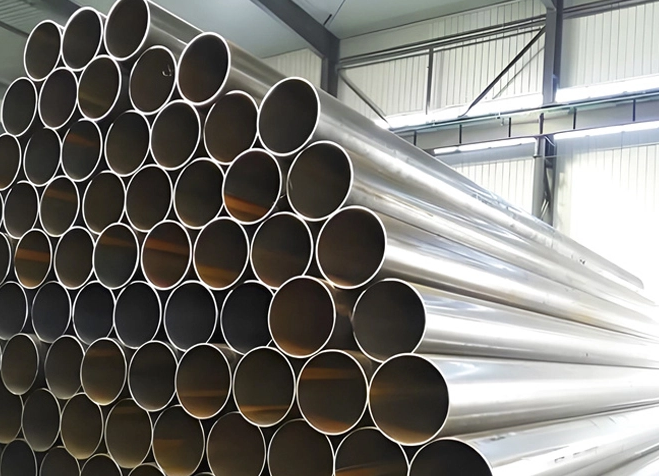
Understanding what modern ERW pipe is — and how the manufacturing technology, quality control systems, and standards coverage of today's electric resistance welded pipe differ from older welded pipe products in ways that matter for performance and reliability — is essential for procurement teams evaluating ERW pipe for demanding applications.
ERW pipe, or Electric Resistance Welded pipe, is manufactured from steel coil or strip that is formed into a cylindrical shape and welded longitudinally using electric resistance welding or high-frequency induction welding — without filler material. JRSK explains that this process uses high-frequency electric current to generate heat and melt the strip edges to form a strong weld. The result is a steel pipe with a longitudinal weld seam that, when manufactured and tested correctly, provides the strength, dimensional consistency, and service reliability required for a wide range of pipeline, structural, mechanical, and industrial applications.
The key distinction between modern ERW pipe and older welded pipe products is not the presence of a weld seam — it is the quality of that weld seam, as determined by the welding technology, heat treatment, and inspection processes applied during manufacturing. A modern HFW steel pipe with online weld seam heat treatment and full NDT inspection is a fundamentally more reliable product than an older ERW pipe without these quality controls.
JRSK lists ERW pipe standards and grades including API 5L grades A25, A, B, X42, X46, X52, X60, X70, and X80 for oil and gas pipelines; ASTM A53 Grade A and Grade B; ASTM A135; ASTM A252; EN 10219; EN 10255; JIS G3444; JIS G3454; GB/T 3091; and GB/T 13793 — providing the standards coverage that supports ERW pipe procurement for oil and gas transmission, structural applications, water and gas systems, pressure service, and general industrial use across international markets.
| Standard | Primary Application | Key Grade Examples |
|---|---|---|
| API 5L | Oil and gas pipeline transmission | Gr.B, X42, X52, X60, X70 |
| ASTM A53 | General purpose, water, gas, structural | Grade A, Grade B |
| ASTM A252 | Steel pipe piles | Grade 1, Grade 2, Grade 3 |
| EN 10219 | Structural hollow sections | S235, S275, S355 |
| GB/T 3091 | Low-pressure fluid service | Q195, Q215, Q235 |
The technical mechanism by which modern high-frequency welding technology and weld seam heat treatment work together to improve the reliability of electric resistance welded pipe — and why these process improvements are the foundation of the case for ERW pipe as a seamless pipe alternative — is the core engineering knowledge that project engineers and procurement teams need to evaluate ERW pipe specifications with confidence.
Modern HFW steel pipe manufacturing uses high-frequency current — typically in the range of 100 to 400 kHz — that concentrates heat precisely at the strip edges through the skin effect and proximity effect of high-frequency current flow. This precise heat concentration produces a narrow, well-controlled weld zone with consistent penetration across the full pipe wall thickness, minimal heat-affected zone width, and a weld microstructure that is more uniform and more predictable than older low-frequency ERW processes produced.
The narrow heat-affected zone of HFW welding is particularly important for weld seam reliability because it limits the volume of material that experiences the thermal cycle of welding — reducing the extent of microstructural change, residual stress, and potential defect formation that the welding process creates. A narrower heat-affected zone means less material that needs to be restored to base metal properties by subsequent heat treatment, and a smaller zone of potential weakness in the finished pipe.
After high-frequency welding, the weld zone and heat-affected zone contain residual tensile stress from the rapid heating and cooling of the welding process, and may contain microstructural features — including martensite or bainite in higher-strength grades — that reduce toughness compared with the base metal. Online weld seam heat treatment — normalizing or annealing applied to the weld zone immediately after welding — addresses these issues by heating the weld zone to a temperature above the transformation range and allowing it to cool in a controlled manner, restoring the weld zone microstructure to a condition closer to the base metal and relieving the residual welding stress.
JRSK describes the manufacturing process as including optional normalizing or annealing to improve mechanical properties and relieve welding stresses — reflecting the quality control logic that weld seam heat treatment is the process step that most directly determines whether the weld zone of an ERW pipe meets the mechanical property requirements of the applicable standard. For applications where weld zone toughness is a design requirement — low-temperature service, impact-sensitive applications, or higher-grade pipeline steels — specifying weld seam heat treatment is an important quality requirement that buyers should confirm with the supplier.
The combination of non-destructive testing and hydrostatic testing provides the objective quality verification that confirms weld seam integrity before the pipe is shipped. JRSK notes that modern ERW pipes often use non-destructive testing methods such as ultrasonic testing, and its process includes visual inspection, NDT, hydrostatic testing, and dimensional checks. Ultrasonic testing of the weld seam detects internal defects including lack of fusion, porosity, and cracks that are not visible on the pipe surface. Hydrostatic testing verifies that the pipe can withstand the specified test pressure without leakage or deformation. Together, these inspection steps provide the quality assurance that allows buyers to specify ERW pipe with confidence for pressure service applications.
The question "Is ERW pipe as strong as seamless?" is the most common search intent for buyers evaluating ERW pipe for demanding applications — and it deserves a technically honest answer that goes beyond a simple yes or no.
Modern ERW pipe manufactured to the correct standard, with appropriate weld seam heat treatment and full NDT inspection, can meet the mechanical property requirements of the applicable standard — including yield strength, tensile strength, elongation, and impact toughness — across the full pipe cross-section including the weld zone. For low-to-medium pressure oil and gas transmission, water supply, structural, mechanical, and general industrial applications where the project specification allows welded pipe, a properly manufactured and tested ERW pipe can provide equivalent service reliability to seamless pipe at lower cost.
Seamless pipe remains the preferred choice for severe high-pressure service, high-temperature process applications, highly corrosive or hazardous fluid service, and applications where the project specification explicitly requires seamless construction — because the absence of a weld seam eliminates the weld zone as a potential weak point and provides more uniform mechanical properties around the full pipe circumference.
| Evaluation Factor | ERW Pipe | Seamless Pipe |
|---|---|---|
| Manufacturing method | Steel strip formed and longitudinally welded | Billet pierced and rolled without seam |
| Weld seam | Has longitudinal weld seam | No welded seam |
| Cost | Usually 20 to 40 percent more economical for suitable applications | Typically higher cost |
| Lead time | Often faster for standard sizes | Can be longer depending on grade and size |
| Wall thickness consistency | Very consistent due to strip-based production | Can vary depending on process |
| Pressure service suitability | Suitable when standard and design allow | Often selected for more severe pressure service |
| Structural use | Strong option for structures, piling, and frames | Also suitable but may be over-specified |
| Inspection focus | Weld seam integrity is the critical quality parameter | Body integrity and dimensional quality are critical |
| Best-fit applications | Low/medium pressure, structural, mechanical, water, gas, selected oil/gas lines | High-pressure, high-temperature, critical process lines |
ERW pipe and welded steel tubing deliver the most commercial value for: oil and gas transmission pipelines where API 5L grades B through X70 are specified and welded pipe is permitted by the project specification, water supply and sewage systems where ASTM A53 or EN 10255 welded pipe is the standard specification, structural applications including building frames, bridges, scaffolding, and foundation piles where EN 10219 or ASTM A252 structural hollow sections are appropriate, mechanical and automotive applications where consistent wall thickness and dimensional accuracy are more important than the absence of a weld seam, and industrial fluid transport systems where the service conditions are within the pressure and temperature limits of the applicable welded pipe standard.
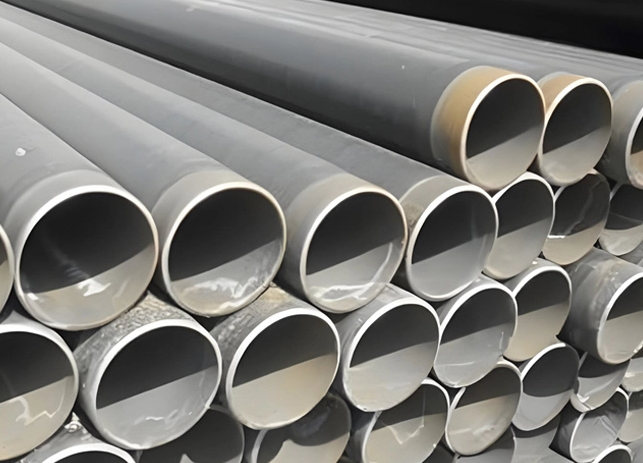
Specifying and procuring ERW pipe for industrial and pipeline applications requires systematic pre-order confirmation of technical requirements, inspection requirements, and supplier capability — and proper handling and storage practices that protect pipe quality through the supply chain and installation process.
Before requesting a quotation for ERW pipe, prepare and confirm the following:
Confirm that welded pipe is permitted by the project specification — some project specifications explicitly require seamless pipe, and this must be verified before specifying ERW pipe
Confirm the applicable standard — API 5L, ASTM A53, ASTM A135, ASTM A252, EN 10219, EN 10255, JIS G3444, GB/T 3091, or other — and the specific grade required for the service conditions
Confirm the outside diameter, wall thickness, and weight — verify that the selected dimensions provide adequate pressure rating and structural capacity for the application
Confirm the length requirement — standard 6-meter lengths or custom lengths — and verify that the selected length is compatible with the installation and handling equipment
Confirm the end type — plain end, beveled end, threaded end, grooved end, or capped end — based on the connection method used in the installation
Confirm the surface treatment requirement — black, galvanized, painted, epoxy-coated, polyethylene-coated, or varnished — based on the corrosion protection requirements of the service environment
Confirm the weld seam heat treatment requirement — specify whether online normalizing or annealing is required, particularly for higher-grade pipeline steels or low-temperature service applications
Confirm the NDT inspection requirement — ultrasonic testing of the weld seam, hydrostatic testing, visual inspection, and dimensional inspection — and verify that the supplier can provide the required inspection documentation
Confirm the material test certificate requirements — chemical analysis, mechanical test results, and heat treatment records — and verify that the certificates will be provided in the required format and language
Confirm the packaging and shipping requirements — pipe end protection, bundle configuration, marking, and export packaging — for the destination port and storage conditions
Store pipes on raised supports above ground level — direct ground contact creates corrosion risk and makes pipe inspection and handling more difficult
Keep pipe ends capped or protected where required — end protection prevents contamination, mechanical damage, and corrosion at the pipe ends during storage and transport
Avoid coating damage during loading and unloading — use appropriate lifting slings and handling equipment that do not damage the pipe coating or surface treatment
Separate pipes by grade, size, and heat number — mixing grades or sizes creates the risk of installing the wrong pipe in the wrong section of the system
Inspect weld seam, coating, and pipe ends before installation — verify that the pipe has not been damaged during transport or storage before it is incorporated into the installation
Keep test certificates and inspection records linked to each batch — certificate traceability is a quality management requirement that must be maintained from receipt through installation
Reinspect pipes after long-term outdoor storage — pipes stored outdoors for extended periods should be reinspected for coating condition and corrosion before installation
The question of whether ERW pipe is as strong as seamless pipe has a technically honest answer in 2026: for low-to-medium pressure oil and gas transmission, water supply, structural, mechanical, and general industrial applications where the project specification permits welded pipe, modern ERW pipe manufactured with HFW welding technology, weld seam heat treatment, and full NDT inspection can provide equivalent service reliability to seamless pipe at meaningfully lower cost and with faster delivery. The performance gap between ERW and seamless pipe that justified the historical default to seamless has been substantially closed by advances in high-frequency welding technology, online heat treatment, and non-destructive testing — making ERW pipe a serious engineering choice rather than simply a cost-cutting compromise.
JRSK supplies ERW pipe with standards coverage including API 5L, ASTM A53, ASTM A135, EN 10219, JIS G3444, and GB/T 3091, with diameters from 1/2 inch to 24 inches, wall thickness from 1.24 mm to 25.4 mm, and surface treatment options including black, galvanized, painted, and epoxy-coated — providing the product range and quality documentation that industrial and pipeline procurement requires.
Contact JRSK today to discuss your ERW pipe size, grade, standard, pressure requirement, surface treatment, weld seam heat treatment requirement, testing documentation, packaging, and delivery schedule. JRSK can help evaluate the right ERW pipe specification for your pipeline, structural, water, gas, mechanical, or industrial project — and provide the technical documentation and supply reliability that demanding project procurement requires.
Q1: What is ERW pipe and how is it manufactured?
ERW pipe stands for Electric Resistance Welded pipe. It is manufactured by forming steel strip or coil into a cylindrical shape and welding the longitudinal seam using electric resistance welding or high-frequency induction welding — without filler material. Modern ERW pipe manufacturing uses high-frequency current to concentrate heat precisely at the strip edges, producing a narrow, well-controlled weld zone with consistent penetration and minimal heat-affected zone width.
Q2: Is ERW pipe as strong as seamless pipe?
Modern ERW pipe manufactured to the correct standard, with appropriate weld seam heat treatment and full NDT inspection, can meet the mechanical property requirements of the applicable standard across the full pipe cross-section including the weld zone. For low-to-medium pressure oil and gas transmission, water supply, structural, mechanical, and general industrial applications where welded pipe is permitted, properly manufactured ERW pipe can provide equivalent service reliability to seamless pipe. Seamless pipe remains preferred for severe high-pressure, high-temperature, or critical service conditions.
Q3: What is the difference between ERW pipe and HFW steel pipe?
HFW steel pipe refers specifically to high-frequency welded pipe — a modern form of ERW manufacturing that uses high-frequency current, typically above 100 kHz, to weld the longitudinal seam. HFW is the dominant modern ERW manufacturing technology and produces better weld quality than older low-frequency ERW processes. In current industrial usage, ERW pipe and HFW steel pipe are often used interchangeably to describe the same product category.
Q4: Why is weld seam heat treatment important for ERW pipe?
Weld seam heat treatment — normalizing or annealing applied to the weld zone after welding — relieves the residual tensile stress created by the welding thermal cycle, restores the weld zone microstructure to a condition closer to the base metal, and improves weld zone toughness. For higher-grade pipeline steels, low-temperature service applications, and impact-sensitive applications, weld seam heat treatment is an important quality requirement that buyers should specify and verify with the supplier.
Q5: What standards are available for ERW pipe and which should I specify?
Common ERW pipe standards include API 5L for oil and gas pipeline transmission, ASTM A53 for general purpose and water and gas service, ASTM A252 for steel pipe piles, EN 10219 for structural hollow sections, and GB/T 3091 for low-pressure fluid service. The correct standard depends on the application, service conditions, pressure rating, and project specification requirements — buyers should confirm the applicable standard with the project engineer before placing an order.
Q6: What are the main applications for electric resistance welded tube?
Electric resistance welded tube is used in oil and gas transmission pipelines, natural gas distribution, water supply and sewage systems, structural frameworks, foundation piles, mechanical components, automotive parts, fencing and guardrails, electrical conduits, HVAC and plumbing systems, and industrial fluid transport — covering a wide range of applications where the service conditions are within the pressure and temperature limits of the applicable welded pipe standard.
Q7: What should buyers confirm before ordering ERW pipe in bulk?
Buyers should confirm that welded pipe is permitted by the project specification, the applicable standard and grade, outside diameter and wall thickness, length and end type, surface treatment requirement, weld seam heat treatment requirement, NDT and hydrostatic test requirements, material test certificate requirements, packaging and shipping requirements, quantity, and delivery schedule — providing this information allows the supplier to confirm the correct specification and provide an accurate technical and commercial proposal.