English
The shale gas industry in 2026 is defined by a relentless push toward longer horizontal laterals, more complex well trajectories, and higher drilling efficiency targets — and the drill pipe that connects the surface rig to the downhole bit and directional drilling tools is the component that either enables or limits this ambition. As operators extend horizontal reaches beyond 3,000 meters and drill through formations with high dogleg severity, complex pressure regimes, and abrasive rock, the mechanical demands placed on the drill string have escalated beyond what standard drill pipe specifications were originally designed to address. Torque requirements that would have been exceptional in vertical well drilling are now routine in long-lateral shale gas wells, and the fatigue loading from continuous rotation through curved well sections creates failure risks that can turn a productive drilling program into an expensive fishing and workover operation.
Drill pipe is a critical component in oil and gas drilling that facilitates the drilling of a wellbore — transmitting rotary power from the rig to the drill bit, carrying drilling fluid downhole to cool the bit and remove cuttings, and supporting the weight and directional control of the entire bottom-hole assembly. For buyers comparing drill casing pipe and drill string products for shale gas horizontal well programs, the distinction between a drill pipe specification that is adequate for vertical well drilling and one that is engineered for the torque, drag, fatigue, and connection stress of long-lateral horizontal drilling is the difference between a drilling program that meets its targets and one that accumulates non-productive time, lost bottom-hole assemblies, and escalating cost per meter. JRSK offers drill pipe options for well drilling including drill pipe, heavy weight drill pipe, API drill pipe, and downhole drill rod, with grades including E75, X95, G105, and S135 for different drilling application requirements.
This guide covers the complete picture for shale gas operators, drilling contractors, and oilfield procurement teams: why long horizontal wells increase torque, drag, and failure risk, what API 5DP drill pipe is and how it functions in the drill string, how high-torque design features including upset ends and tool joint connections support horizontal drilling performance, how to select the right drill pipe specification for specific horizontal well conditions, and what procurement and field handling practices protect drill pipe performance through the drilling program. Secondary keywords relevant to this decision — high torque drill pipe, directional drilling tools, and horizontal well drilling — are addressed throughout.
The commercial and technical case for investing in high-torque, high-strength drill pipe for shale gas horizontal well programs starts with a clear understanding of the specific failure mechanisms that long lateral drilling creates — and why these mechanisms make drill pipe selection a safety-critical engineering decision with direct consequences for drilling program cost and efficiency.
Excessive torque and twist-off risk is the most commercially damaging failure mode in long-lateral horizontal drilling. As the horizontal section extends, the friction between the drill string and the wellbore wall increases — creating a torque demand at the surface that must be transmitted through the entire drill string to the bit. In a long lateral, the cumulative friction torque can approach or exceed the torsional capacity of the drill pipe, creating the risk of twist-off — a catastrophic failure where the drill pipe body or connection fails in torsion, leaving the bottom-hole assembly and lower drill string in the wellbore. A twist-off in a long lateral requires fishing operations that can consume days of rig time and cost hundreds of thousands of dollars — and in the worst cases, the bottom-hole assembly cannot be recovered and the well must be sidetracked.
Fatigue damage from cyclic bending in curved sections is the failure mechanism that accumulates invisibly during drilling and creates sudden failures that appear unpredictable but are actually the result of progressive fatigue crack growth. As the drill string rotates through the build section and the curved portions of the horizontal lateral, each rotation subjects the pipe body to a complete cycle of bending stress — tension on one side and compression on the other. Over thousands of rotations, this cyclic bending stress initiates and grows fatigue cracks at stress concentration points including tool joint shoulders, upset transitions, and any surface defects or corrosion pits on the pipe body. The fatigue life of the drill pipe in a curved section depends on the dogleg severity, the pipe grade and wall thickness, the rotational speed, and the surface condition of the pipe — making fatigue management a critical element of drill string design for horizontal wells.
Tool joint wear and connection fatigue in the curved sections of horizontal wells create a third failure mechanism that is specific to directional drilling applications. The tool joints — the thick-walled threaded connections that join adjacent drill pipe sections — experience the highest stress in the drill string because they are the stiffest elements and therefore attract the highest bending moment in curved sections. Repeated bending and torque cycling at the tool joint creates fatigue loading at the thread roots and shoulder faces that can initiate connection failures — particularly in high-dogleg sections where the bending stress is most severe.
For shale gas operators and drilling contractors, drill pipe failure in a long horizontal lateral creates consequences that extend far beyond the cost of the failed pipe. Lost bottom-hole assemblies containing MWD, LWD, motors, and rotary steerable tools represent equipment losses of hundreds of thousands of dollars. Fishing operations consume rig time at day rates that can exceed $50,000 per day. Missed drilling windows in pad drilling programs create schedule cascades that affect multiple wells. And the non-productive time from drill string failures directly increases the cost per meter of the drilling program — eroding the economics of the shale gas development.
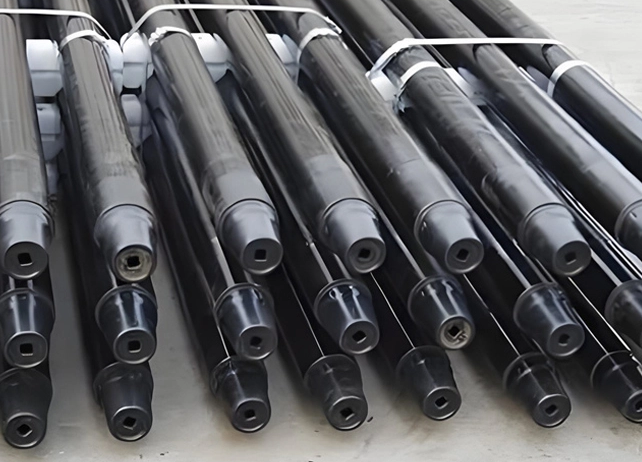
Understanding what API 5DP drill pipe is — and how its design and function differ fundamentally from drill casing pipe in ways that determine the performance requirements for each product — is essential context for procurement teams evaluating drill string products for horizontal well drilling programs.
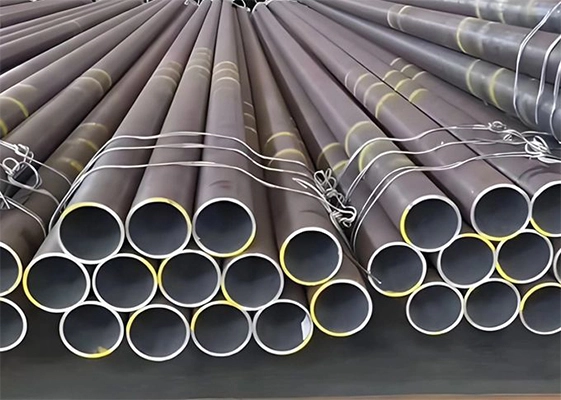
Drill pipe is a thick-walled hollow steel pipe used as a critical component of the drill string — connecting the surface drilling rig to the drill bit and other bottom-hole tools, transmitting rotary power from the rig to the bit, and carrying drilling fluid downhole to cool the bit and remove cuttings. JRSK describes drill pipe as a critical component in oil and gas drilling that facilitates the drilling of a wellbore, with two main functions: transmitting rotational power from the rig to the bit and allowing drilling fluid to circulate down to the bit and back up the wellbore.
The fundamental distinction between drill pipe and drill casing pipe is the distinction between a dynamic drilling tool that rotates, moves, and is tripped in and out of the wellbore throughout the drilling operation, and a structural wellbore component that is installed and cemented in place to provide long-term wellbore integrity. This distinction drives completely different design requirements — drill pipe must be optimized for torque transmission, fatigue resistance, and hydraulic efficiency, while drill casing pipe must be optimized for collapse resistance, burst resistance, and long-term corrosion protection.
| Design Parameter | Drill Pipe | Drill Casing Pipe |
|---|---|---|
| Primary mechanical load | Torque, tension, bending fatigue | Collapse, burst, tension |
| Movement in service | Rotates and reciprocates continuously | Installed and cemented — static |
| Connection design priority | Torque capacity and fatigue resistance | Sealing performance and tensile strength |
| Service life model | Fatigue cycles and wear accumulation | Long-term pressure containment |
| Failure consequence | Lost BHA, fishing, NPT | Lost well integrity, workover |
The technical mechanism by which high-torque drill pipe design features deliver the torsional capacity, fatigue resistance, and connection integrity that long-lateral horizontal drilling requires — and why each design element must be evaluated as part of an integrated drill string design rather than independently — is the core engineering knowledge that drilling engineers and procurement teams need to specify drill pipe correctly for demanding shale gas applications.
The upset end is the thickened zone at each end of the drill pipe body where the pipe transitions from the thinner-walled pipe body to the thicker-walled tool joint. This transition zone is one of the highest-stress locations in the drill string — it must transfer the full torque, tension, and bending load between the pipe body and the tool joint, and it is subject to stress concentration from the geometric change in cross-section. The upset design — internal upset, external upset, or internal-external upset — determines how effectively the transition zone distributes this stress and how much fatigue resistance the pipe end provides in curved well sections.
For horizontal well drilling where the drill string experiences continuous bending fatigue in curved sections, the upset end design is a critical performance parameter. A well-designed upset end with smooth geometric transitions and adequate wall thickness at the transition zone provides better fatigue resistance than a poorly designed upset with abrupt cross-section changes that create stress concentration. JRSK states that drill pipes are made from high-strength steel with special threaded couplings called tool joints connecting multiple sections — reflecting the integrated design approach that combines pipe body, upset end, and tool joint into a complete connection system.
The tool joint is the threaded connection that joins adjacent drill pipe sections — and it is the element of the drill string that most directly determines the torsional capacity and connection reliability of the drill string in horizontal well drilling. The tool joint must transmit the full makeup torque applied during connection, the operational torque transmitted to the bit during drilling, and the additional torque from friction in the horizontal section — while maintaining thread engagement and shoulder contact under the combined loading of torque, tension, bending, and internal pressure.
For high-torque horizontal well drilling, the tool joint design must provide: adequate shoulder area for torque transmission without galling or yielding, thread geometry that maintains engagement under combined loading, adequate box and pin wall thickness for torsional and bending strength, and surface hardness that resists wear from repeated makeup and breakout cycles. The tool joint OD and ID dimensions also affect the hydraulic efficiency of the drill string — a larger tool joint OD increases the annular pressure loss and the torque from wellbore contact, while a smaller tool joint ID restricts the drilling fluid flow rate and increases the standpipe pressure.
The steel grade of API 5DP drill pipe determines its yield strength, tensile strength, and toughness — the mechanical properties that determine how much torque, tension, and bending load the pipe can withstand before yielding or fracturing. JRSK's mechanical property data lists API drill pipe grades E75, X95, G105, and S135 with increasing yield strength ranges — providing the grade selection range that covers drilling applications from standard vertical wells to demanding high-torque horizontal programs.
| Grade | Typical Application | Key Performance Consideration |
|---|---|---|
| E75 | General drilling applications, less demanding wells | Cost-effective for standard service conditions |
| X95 | Higher strength for more demanding drilling | Better torque and tensile capacity than E75 |
| G105 | Common choice for deeper or more demanding drilling | Good balance of strength and toughness |
| S135 | High-strength grade for high-load drilling programs | Highest torque and tensile capacity — evaluate toughness |
For shale gas horizontal wells where torque and fatigue loading are the primary design drivers, the grade selection must balance the higher torque capacity of higher-strength grades against the toughness requirements for fatigue resistance in curved sections — because higher-strength steels are not always more fatigue-resistant than lower-strength grades, and the optimal grade selection depends on the specific loading conditions of the well.
The selection of the right drill pipe specification for a specific horizontal well drilling application requires systematic evaluation of the well profile, torque and drag requirements, fatigue loading, hydraulic program, and directional drilling tool compatibility — and an understanding of how different specification choices affect the overall drilling program performance.
| Specification Factor | Impact on Horizontal Well Performance | Selection Guidance |
|---|---|---|
| Steel grade | Determines torque capacity and fatigue resistance | Higher grade for higher torque — evaluate toughness |
| Outside diameter | Affects annular clearance, torque, and hydraulics | Match to hole size and hydraulic program |
| Inside diameter | Controls mud flow rate and pressure loss | Optimize for cuttings transport in long laterals |
| Wall thickness | Influences strength, weight, and fatigue resistance | Balance strength and weight for drag management |
| Length range | Affects tripping efficiency and handling | R2 or R3 for most horizontal well programs |
| Tool joint type | Determines connection torque capacity | Select for maximum torque requirement |
| Upset type | Affects fatigue resistance at pipe end | IEU for most demanding horizontal applications |
| NDT inspection | Detects defects before field use | Full body and end area inspection for horizontal wells |
JRSK lists drill pipe with outside diameters from 2-3/8 inch to 6-5/8 inch and length ranges from Range 1 through Range 3, with grades including E75, X95, G105, S135, SS-105, X57, X75, and X39 — providing the size and grade range that covers most horizontal well drilling applications from small-diameter directional wells to large-diameter high-torque shale gas programs.
High-torque API 5DP drill pipe delivers the most value for: shale gas horizontal well programs where long laterals create high torque and drag, extended-reach drilling programs where the horizontal reach pushes the limits of drill string torque capacity, complex directional drilling programs with high dogleg severity sections that create severe fatigue loading, geothermal drilling programs where high temperatures add thermal stress to the mechanical loading, and any drilling program where non-productive time from drill string failure creates significant cost and schedule impact.
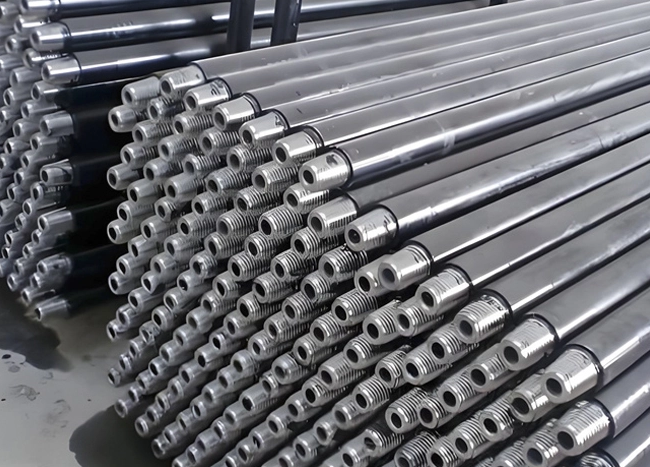
Procuring the right drill pipe for a horizontal well drilling program requires systematic pre-order confirmation of technical requirements, inspection requirements, and supplier capability — and proper field handling and maintenance practices that protect drill pipe performance through the drilling program.
Before requesting a quotation for API 5DP drill pipe, prepare and confirm the following:
Confirm the well type and profile — vertical, directional, horizontal, or extended reach — and the specific horizontal section length and dogleg severity that the drill pipe must accommodate
Confirm the required drill pipe grade — E75, X95, G105, S135, or project-specific — based on the torque, tensile, and fatigue requirements of the well design
Confirm the OD, ID, wall thickness, and weight per foot — verify that the selected dimensions provide adequate strength and hydraulic performance for the drilling program
Confirm the length range — R1, R2, or R3 — based on the rig handling capability and tripping efficiency requirements
Confirm the tool joint type and connection requirement — verify that the selected tool joint provides adequate torque capacity for the maximum anticipated operational torque
Confirm the upset type — internal upset, external upset, or internal-external upset — based on the fatigue resistance requirements of the curved well sections
Confirm the NDT inspection requirements — ultrasonic testing, magnetic particle testing, and thread inspection — and verify that the supplier can provide the required inspection documentation
Confirm the thread protection and coating requirements — thread protectors must be installed for all shipment and storage, and any special coating requirements for corrosive service must be specified
Confirm the quantity, delivery schedule, and destination port — verify that the supplier's production capacity and logistics capability can meet the drilling program schedule
Confirm the compatibility with directional drilling tools — MWD, LWD, motors, and rotary steerable tools — and verify that the tool joint OD and ID dimensions are compatible with the planned bottom-hole assembly
Keep thread protectors installed during all storage and transport operations — thread damage from handling is the most common cause of connection failure during drilling
Inspect tool joints before running — verify thread condition, shoulder face condition, and OD wear before each trip into the wellbore
Apply the correct thread compound to all connections — the right compound type and application quantity are critical for achieving the specified makeup torque and preventing galling
Monitor torque, drag, and standpipe pressure trends during drilling — changes in these parameters provide early warning of developing problems including tool joint wear, cuttings accumulation, and formation instability
Inspect used drill pipe for fatigue cracks, wear, and corrosion at regular intervals — the inspection frequency should be based on the severity of the drilling conditions and the accumulated service history of the pipe
Separate pipe by grade, size, and service history — mixing drill pipe grades or sizes creates the risk of running the wrong pipe in the wrong section of the drill string
Remove damaged or heavily worn drill pipe from service immediately — a drill pipe with visible fatigue cracks, excessive tool joint wear, or damaged threads should not be run in the wellbore regardless of the schedule pressure
Keep records of running hours, connection cycles, repairs, and inspections for each drill pipe joint — this service history data is essential for fatigue life management and for making informed decisions about when to retire individual joints from service
In 2026, the shale gas industry's push toward longer horizontal laterals and more complex well trajectories has made drill pipe selection a critical engineering decision that determines whether a drilling program meets its efficiency and cost targets or accumulates non-productive time from twist-offs, fishing operations, and connection failures. The right API 5DP drill pipe specification — the right grade for the torque and fatigue requirements, the right upset end design for the curved section loading, the right tool joint for the connection torque capacity, and the right inspection program for the defect detection requirements — is the foundation of a reliable horizontal well drilling program.
JRSK supplies drill pipe including API drill pipe and heavy weight drill pipe with grades E75, X95, G105, and S135, outside diameters from 2-3/8 inch to 6-5/8 inch, and length ranges from Range 1 through Range 3 — with manufacturing, inspection, testing, coating, and final assembly capability for demanding horizontal well drilling applications.
Contact JRSK today to discuss your well profile, horizontal reach, drill pipe grade, OD, ID, tool joint requirement, torque target, inspection needs, packaging, and delivery schedule. JRSK can help evaluate the right drill pipe specification for your shale gas horizontal well program and provide the technical documentation and supply reliability that demanding drilling programs require.
Q1: What is drill pipe and what are its two main functions in well drilling?
Drill pipe is a thick-walled hollow steel pipe used as a critical component of the drill string. Its two main functions are transmitting rotational power from the surface rig to the drill bit, and allowing drilling fluid to circulate downhole to cool the bit and carry rock cuttings back to the surface. In horizontal wells, it also supports the weight and directional control of the bottom-hole assembly through curved and lateral sections.
Q2: What is API 5DP drill pipe and what grades are available?
API 5DP drill pipe refers to drill pipe manufactured according to API drill pipe requirements for oil and gas drilling applications. Standard API 5DP grades include E75, X95, G105, and S135, with increasing yield strength ranges that provide different levels of torque capacity, tensile strength, and load-bearing capability for different drilling application requirements.
Q3: Why is high-torque drill pipe important for shale gas horizontal wells?
Shale gas wells typically include long horizontal laterals where friction between the drill string and the wellbore wall creates high torque demand. High-torque drill pipe — with stronger tool joints, better upset end design, and higher-strength steel grade — reduces the risk of twist-off failure, supports longer horizontal reaches, and improves drilling reliability in the complex loading conditions of long-lateral horizontal drilling.
Q4: What drill pipe specifications matter most for horizontal well drilling?
The most important specifications for horizontal well drilling are steel grade for torque and fatigue capacity, outside diameter for annular clearance and hydraulics, inside diameter for drilling fluid flow efficiency, wall thickness for strength and fatigue resistance, tool joint type for connection torque capacity, upset type for fatigue resistance at the pipe end, and NDT inspection for defect detection before field use.
Q5: What is the difference between drill pipe and drill casing pipe?
Drill pipe is a rotating and removable drill string component used during the drilling operation — it transmits torque, carries drilling fluid, and is tripped in and out of the wellbore. Drill casing pipe is installed in the wellbore and cemented in place to support the well wall, isolate formations, and maintain long-term wellbore integrity. They have fundamentally different design requirements and are not interchangeable.
Q6: Which drill pipe grade is most suitable for long-lateral shale gas horizontal wells?
The optimal grade depends on the specific torque, drag, fatigue, and tensile requirements of the well design. G105 and S135 are commonly evaluated for more demanding horizontal drilling conditions where higher torque capacity is required. The grade selection should be based on a drill string design analysis that considers the maximum anticipated torque, the dogleg severity of the curved sections, the tensile load from the drill string weight, and the required safety factor.
Q7: What should buyers confirm before ordering API 5DP drill pipe for a horizontal well program?
Buyers should confirm the well profile and horizontal section length, required grade, OD and ID, wall thickness and weight, length range, tool joint type and connection requirement, upset type, NDT inspection requirements, thread protection and coating requirements, compatibility with directional drilling tools, quantity, delivery schedule, and destination port — providing this information allows the supplier to confirm the correct specification and provide an accurate technical and commercial proposal.