English
As the global oil and gas industry moves into deeper and more technically demanding reservoirs in 2026, the engineering requirements placed on casing pipe have escalated beyond what standard well construction specifications were originally designed to address. Shallow and medium-depth conventional reservoirs that could be developed with standard API 5CT casing grades and conventional connection designs are being depleted, and operators are increasingly drilling into ultra-deep formations where bottomhole pressures exceed 15,000 psi, temperatures exceed 150°C, formation stresses create severe collapse loading, and corrosive fluids containing H₂S and CO₂ attack the casing string throughout its service life. In these high-pressure, high-temperature environments — commonly referred to as HPHT wells — casing pipe is not simply a steel tube placed in the wellbore to keep it open. It is the primary structural barrier that prevents wellbore collapse, isolates high-pressure formations from shallower zones, supports cementing operations, and protects the long-term production integrity of the well.
The selection of the right oilfield casing for ultra-deep well applications — the right steel grade, wall thickness, collapse resistance rating, connection design, and corrosion resistance specification — is a technical and commercial decision with consequences that extend far beyond the cost of the casing string itself. A casing failure in a deep well can mean lost well integrity, stuck tools, cementing failure, formation fluid migration, expensive workover operations, and in the most serious cases, safety and environmental incidents that create liability and regulatory consequences orders of magnitude larger than the value of the casing. For buyers evaluating a reliable casing pipe manufacturer, JRSK positions its casing products for oil and gas exploitation, well-wall protection, production efficiency, and harsh drilling conditions including high pressure, high temperature, and corrosive liquids — with casing products including J55, N80, L80, and P110 grades with LTC, STC, and BTC connection options.
This guide covers the complete picture for oilfield procurement teams, drilling engineers, and well construction managers: why ultra-deep wells demand higher collapse resistance than standard casing can provide, what oilfield casing is and how it functions in well construction, how steel grade, wall thickness, and connection design determine collapse resistance and overall casing performance, how to select the right casing specification for specific well conditions, and what procurement and handling practices protect casing quality from mill to wellsite. Secondary keywords relevant to this decision — API 5CT casing, high-collapse casing, and deep well drilling solutions — are addressed throughout.
The commercial and technical case for investing in high-strength, high-collapse casing for ultra-deep well applications starts with a clear understanding of the specific failure mechanisms that deep well conditions create — and why these mechanisms make casing selection a safety-critical engineering decision rather than a commodity procurement choice.
External collapse pressure from formation stress and mud weight is the primary mechanical failure mechanism for casing in deep wells. As well depth increases, the overburden pressure from the rock column above increases, and the formation stress acting on the casing from outside increases correspondingly. During drilling, the hydrostatic pressure of the drilling mud column adds to the external pressure on the casing. During cementing operations, the cement slurry pressure creates additional external loading. And in depleted reservoir zones where formation pressure has been reduced by production, the differential between external formation stress and reduced internal pressure can create collapse loading that exceeds the capacity of standard casing grades.
The collapse resistance of a casing pipe depends on its steel grade, outside diameter, wall thickness, wall-thickness uniformity, and the ovality of the pipe body. Any factor that reduces the effective wall thickness — manufacturing tolerance variation, corrosion, mechanical damage during handling — reduces the collapse resistance below the nominal rated value. In ultra-deep wells where the collapse loading is already close to the design limit, these reductions in effective collapse resistance can push the casing into failure.
HPHT thermal and pressure cycling creates a second category of failure risk that is specific to deep well environments. As the well is drilled, completed, and produced, the casing string experiences repeated cycles of pressure and temperature change — from the cold drilling mud temperature to the hot formation temperature during production, and from the low pressure of drilling to the high pressure of production and workover operations. These thermal and pressure cycles create fatigue loading on the casing body and connections that accumulates over the well's service life, potentially initiating cracks at stress concentration points including thread roots, coupling interfaces, and wall-thickness variations.
Corrosive downhole fluids are the third major failure mechanism in deep well casing service. Many deep reservoirs contain CO₂, H₂S, chlorides, and other corrosive species that attack the casing steel through general corrosion, pitting corrosion, sulfide stress cracking, and stress corrosion cracking. For standard carbon steel casing grades, exposure to H₂S above threshold concentrations can cause sulfide stress cracking — a brittle fracture mechanism that can cause sudden casing failure at stress levels well below the material's nominal yield strength. Selecting the correct material grade and heat treatment condition for the specific corrosion environment of the well is as important as selecting the correct mechanical strength grade.
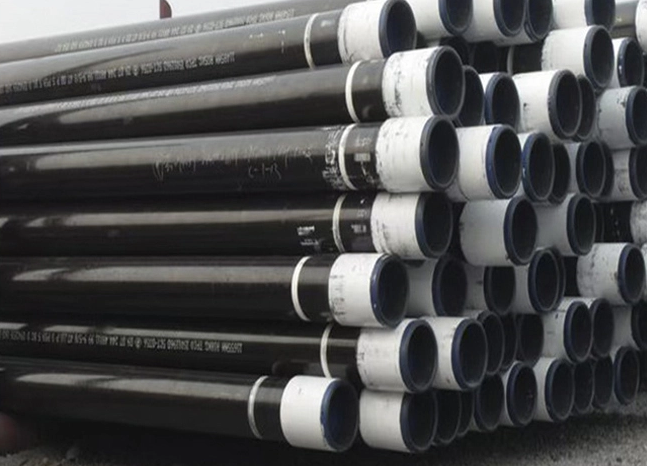
Understanding what oilfield casing is — and how the different casing strings in a well construction program work together to provide the structural integrity, pressure isolation, and production protection that the well requires — is essential context for evaluating casing pipe specifications for deep well applications.
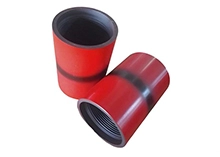
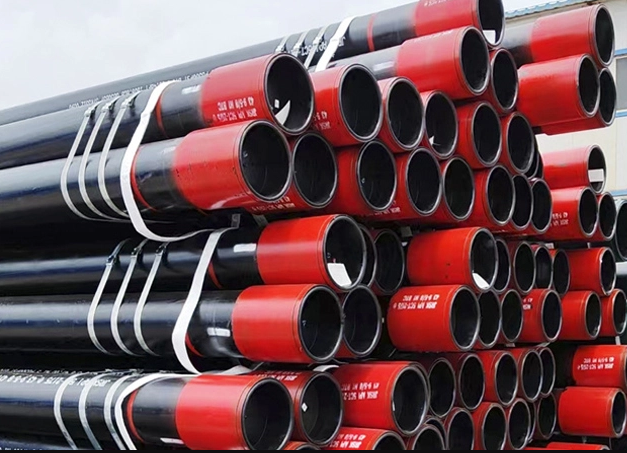
A casing pipe is a steel pipe installed in a drilled wellbore to support the well wall, isolate different formations, protect groundwater zones, and provide a stable channel for drilling, completion, and production operations. JRSK describes oil casing as a key tool in oil and gas exploitation, helping protect oil and gas well walls, improve mining efficiency, and ensure production safety. The casing string is not a single pipe but a series of connected pipes run into the wellbore and cemented in place — creating a composite structural system that must maintain its integrity under the combined mechanical, thermal, and chemical loading of the well's service life.
| Casing Type | Typical Function | Deep Well Significance |
|---|---|---|
| Conductor casing | Supports shallow unconsolidated formations and wellhead structure | Provides foundation for subsequent casing strings |
| Surface casing | Protects freshwater zones and provides blowout prevention support | Critical for well control and environmental protection |
| Intermediate casing | Isolates abnormal pressure zones and unstable formations | Most critical for pressure management in deep wells |
| Production casing | Supports production from the reservoir to surface | Must withstand full production pressure and temperature |
| Liner casing | Extends casing coverage without running to surface | Used in deep wells to manage casing weight and cost |
JRSK's product range includes casing products with J55, N80, L80, and P110 grades and LTC, STC, and BTC connection options — providing coverage for the different casing string requirements of well construction programs from surface casing to production casing.
The technical mechanism by which steel grade selection, wall thickness control, and connection design work together to determine the collapse resistance, burst resistance, tensile capacity, and corrosion performance of oilfield casing in ultra-deep well conditions — and why each of these factors must be evaluated as part of an integrated casing design rather than independently — is the core engineering knowledge that drilling engineers and procurement teams need to specify casing correctly for demanding deep well applications.
The steel grade of oilfield casing determines its yield strength, tensile strength, hardness, and toughness — the mechanical properties that determine how much collapse pressure, burst pressure, and tensile load the casing can withstand before yielding or fracturing. API 5CT / ISO 11960 defines the standard casing grades used in well construction, with each grade specified by a minimum yield strength range that determines its mechanical performance capacity.
For deep well applications, the selection of the appropriate steel grade requires evaluating the specific loading conditions of each casing string section — the external collapse pressure from formation stress and mud weight, the internal burst pressure from formation fluid pressure and well control operations, the tensile load from the weight of the casing string below, and the combined loading from simultaneous application of these forces. JRSK lists P110 casing pipe among its products and notes that material selection should depend on application requirements and geological conditions — reflecting the engineering principle that grade selection must be driven by the specific well conditions rather than by a generic preference for higher or lower strength.
The collapse resistance of a casing pipe is strongly dependent on its wall thickness — but the relationship is not simply that thicker walls provide more collapse resistance. The uniformity of the wall thickness around the circumference of the pipe — the degree to which the actual wall thickness matches the nominal specification without excessive variation — is equally important for collapse performance. A pipe with a nominal wall thickness that meets the specification but has localized thin spots due to manufacturing variation will have a collapse resistance lower than the nominal rating predicts, because collapse initiates at the weakest point in the cross-section.
For high-collapse casing applications in ultra-deep wells, strict wall-thickness tolerance control is a critical quality requirement that must be specified and verified through inspection. The difference between a casing pipe with tight wall-thickness tolerance control and one with the maximum allowable tolerance variation can be significant in terms of actual collapse resistance — and in a deep well where the design collapse loading is close to the nominal rating, this difference can determine whether the casing survives the well's service conditions or fails.
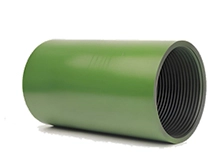
The connection between adjacent casing pipes — the threaded coupling that joins the pin end of one pipe to the box end of the next — is the most mechanically complex and most failure-prone element of the casing string. The connection must provide tensile strength to support the weight of the casing string below, sealing performance to prevent fluid migration through the thread interface, and resistance to the combined loading of tension, compression, bending, and internal and external pressure that the casing string experiences during running, cementing, and production.
JRSK lists LTC, STC, and BTC connection options for its casing products — the standard API connection types that provide different combinations of tensile strength, sealing performance, and make-up torque capacity for different well construction applications. For ultra-deep wells where connection performance is critical, the selection between standard API connections and premium connections with metal-to-metal sealing should be evaluated based on the specific loading conditions and sealing requirements of the well.
The selection of the right casing pipe specification for a specific deep well application requires a systematic evaluation of the well conditions, loading requirements, corrosion environment, and connection performance needs — and an understanding of how different casing grades and configurations address different combinations of these requirements.
| Well Condition | Primary Risk | Recommended Casing Direction |
|---|---|---|
| Standard oil and gas well | General pressure and mechanical load | API 5CT J55 / K55 / N80 casing |
| Deeper intermediate section | Higher external collapse pressure | Higher-grade oilfield casing such as N80 or P110 |
| Ultra-deep HPHT well | Collapse, burst, thermal stress combined | High-collapse casing with strict wall-thickness control and P110 or Q125 grade |
| CO₂ / H₂S environment | Corrosion and sulfide stress cracking | Corrosion-resistant alloy evaluation — 3Cr, 9Cr, 13Cr, or 22Cr |
| Unstable formation | Borehole collapse and deformation | Strong casing grade plus optimized cementing design |
| High-pressure reservoir | Burst and connection sealing risk | Grade and connection review with adequate safety factor |
| Extended reach well | Tension, bending, and torque combined | Strong body plus premium or suitable connection selection |
JRSK notes that carbon steel casing may suit general oil and gas wells, while alloy steel and special materials such as 3Cr, 9Cr, 13Cr, and 22Cr may be used for complex geological conditions and CO₂ / H₂S well environments — reflecting the material selection logic that corrosion environment must be evaluated alongside mechanical loading in deep well casing specification.
| Grade | Typical Application | Key Buyer Consideration |
|---|---|---|
| J55 / K55 | Surface casing and standard service wells | Cost-effective for less severe well conditions |
| N80 | Intermediate strength for broader oilfield use | Balance of strength and cost for moderate depth wells |
| L80 | Controlled yield strength — often considered for sour service | Verify sour-service requirements and heat treatment |
| P110 | Higher-strength casing for deeper or higher-load wells | Evaluate toughness, connection performance, and collapse margin |
| Q125 / high-strength options | Severe deep well or ultra-deep well applications | Requires strict design verification and complete supplier documentation |
| High-collapse casing | Collapse-critical sections in deep wells | Requires wall-thickness, ovality, grade, and inspection control |
High-strength oilfield casing delivers the most value for: ultra-deep oil and gas well construction where formation pressure and temperature exceed standard casing design limits, HPHT well development where combined mechanical and thermal loading requires careful casing design, shale gas and unconventional well programs where extended reach and complex well trajectories create combined loading on the casing string, geothermal well construction where high temperatures create thermal stress on the casing, and workover and sidetrack operations in deep wells where the existing casing string must maintain integrity under additional loading from the new well construction.
Procuring the right casing pipe for a deep well application requires systematic pre-order confirmation of technical requirements, documentation requirements, and supplier capability — and proper handling and storage practices that protect casing quality from mill delivery through wellsite running.
Before requesting a quotation from a casing pipe manufacturer, prepare and confirm the following:
Confirm the target well depth and the specific casing string section being specified — surface, intermediate, production, or liner — as each section has different loading requirements
Confirm the formation pressure and temperature at the casing setting depth — these parameters determine the collapse, burst, and thermal loading that the casing must withstand
Confirm the required collapse pressure rating and verify that the selected grade and wall thickness provide adequate collapse resistance with the required safety factor
Confirm the required burst pressure rating and verify that the selected grade and wall thickness provide adequate burst resistance for the maximum anticipated internal pressure
Confirm the tensile load requirement — the weight of the casing string below the connection being evaluated — and verify that the selected connection provides adequate tensile capacity
Confirm the mud weight and cementing pressure — these parameters contribute to the external loading on the casing during drilling and cementing operations
Confirm the CO₂ and H₂S content of the formation fluids — if H₂S is present above threshold concentrations, sour-service material requirements must be evaluated
Confirm the required API 5CT grade — J55, K55, N80, L80, P110, Q125, or project-specific requirement — and verify that the supplier can provide the grade with the required documentation
Confirm the OD, wall thickness, weight per foot or meter, and length range — R1, R2, R3, or project-specific length — for each casing size in the order
Confirm the connection type — LTC, STC, BTC, or premium connection — based on the tensile, sealing, and torque requirements of the specific casing string section
Confirm the inspection requirements — NDT, hydrostatic test, drift test, thread inspection, and coupling inspection — and verify that the supplier can provide the required inspection documentation
Confirm the material test certificate requirements — heat number traceability, chemical analysis, mechanical test results, and heat treatment records
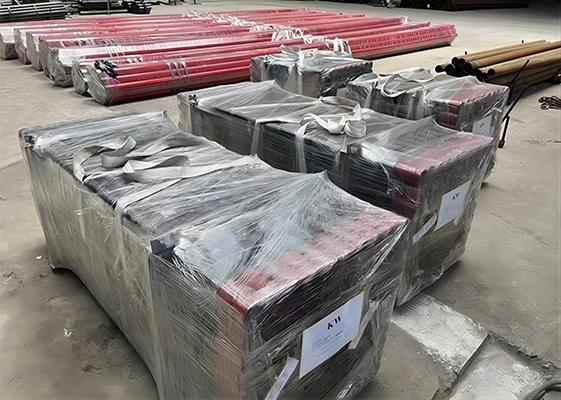
Store casing pipes on clean supports above ground level — direct ground contact creates corrosion risk and makes pipe inspection and handling more difficult
Keep thread protectors installed on all pipe ends until the pipe is ready to be run — thread damage from handling is the most common cause of connection failure during running
Avoid impact damage to pipe ends and couplings during unloading, yard handling, and pipe rack operations — impact damage to the pipe end can create stress concentrations that reduce collapse and burst resistance
Separate grades, sizes, heats, and batches clearly in the pipe yard — mixing casing grades or sizes creates the risk of running the wrong pipe in the wrong section of the well
Inspect threads before running — verify that thread protectors have not allowed contamination or damage to the thread form, and apply the correct thread compound before make-up
Check drift and internal cleanliness before running — a drift mandrel run through each joint confirms that the internal diameter is clear of obstructions that would restrict tool passage
Review mill test certificates before field delivery — verify that the certificates match the pipe markings and that all required test results are within specification
Keep traceability records linked to each casing string — the ability to trace each joint of casing back to its mill certificate is a regulatory requirement in many jurisdictions and an essential quality management practice
In 2026, the deepening of global oil and gas well programs has made casing pipe selection a safety-critical engineering decision that requires systematic evaluation of steel grade, wall thickness control, collapse resistance, burst resistance, connection performance, corrosion resistance, and inspection documentation — not simply a comparison of grade names and unit prices. The consequences of casing failure in an ultra-deep HPHT well — lost well integrity, expensive workover operations, safety incidents, and environmental risk — consistently exceed the cost of investing in the correct high-strength, high-collapse casing specification by orders of magnitude.
JRSK supplies casing and tubing products including J55, N80, L80, and P110 grades with LTC, STC, and BTC connection options, with over 20 years of focus on API standard casing and tubing export — providing the product range, documentation capability, and supply reliability that deep well casing procurement requires.
Contact JRSK today to discuss your well depth, casing size, grade requirement, connection type, collapse rating, corrosion environment, API 5CT documentation needs, and delivery schedule. JRSK can help evaluate the right oilfield casing specification for your deep well drilling program and provide the technical documentation and supply support that demanding well construction projects require.
Q1: What is casing pipe and what does it do in an oil or gas well?
Casing pipe is a steel pipe installed in a drilled wellbore to support the well wall, prevent formation collapse, isolate different formations from each other, protect freshwater zones, support cementing operations, and maintain well integrity during drilling, completion, and production. It is the primary structural barrier in the well and must withstand the combined mechanical, thermal, and chemical loading of the well's service life.
Q2: What are the casing pipe strength requirements for deep wells?
Deep well casing must be evaluated for collapse resistance against external formation pressure and mud weight, burst resistance against internal formation fluid pressure, tensile capacity to support the weight of the casing string, combined loading from simultaneous application of these forces, thermal stress from temperature cycling, and corrosion resistance in CO₂ and H₂S environments. Higher-strength grades such as P110 and Q125 are typically evaluated for deeper or more demanding well sections.
Q3: What is API 5CT casing and why is it the standard reference for oilfield casing?
API 5CT / ISO 11960 is the industry standard specification for casing and tubing used as steel pipes in oil and gas wells. It defines the chemical composition, mechanical properties, dimensional requirements, inspection requirements, and marking requirements for each casing grade — providing the common technical language that allows operators, drilling engineers, and suppliers to specify and verify casing quality consistently across the global oilfield industry.
Q4: Why is high-collapse casing important for deep well applications?
High-collapse casing is important when the external loading on the casing — from formation stress, mud weight, cementing pressure, or depleted-zone differential pressure — may exceed the collapse resistance of standard casing. High-collapse casing achieves higher collapse resistance through tighter wall-thickness tolerance control, optimized pipe geometry, and higher steel grade — providing a greater safety margin against collapse failure in the most demanding deep well sections.
Q5: Which casing grade should I specify for an ultra-deep HPHT well?
The correct grade depends on the specific well depth, formation pressure, temperature, corrosion environment, load design, and required safety factor. P110 is commonly evaluated for deeper well sections with higher mechanical loading. Q125 and project-specified high-strength grades may be required for the most demanding ultra-deep HPHT applications. Corrosion-resistant alloy grades such as 13Cr or 22Cr should be evaluated when CO₂ or H₂S is present above threshold concentrations.
Q6: What connection types are available for casing pipe and how do I choose?
Common API casing connections include STC, LTC, and BTC — providing different combinations of tensile strength, sealing performance, and make-up torque capacity. STC and LTC are standard connections for most well construction applications. BTC provides higher tensile efficiency and is often specified for production casing and deeper well sections. Premium connections with metal-to-metal sealing are evaluated for ultra-deep wells and applications where connection sealing performance is critical.
Q7: What documentation should buyers require from a casing pipe manufacturer?
Buyers should require material test certificates with heat number traceability, chemical analysis results, mechanical test results including yield strength, tensile strength, elongation, and hardness, heat treatment records, dimensional inspection reports, NDT inspection reports, hydrostatic test records, thread inspection reports, and coupling quality documentation — all linked to the specific pipe joints in the order through heat number and pipe number traceability.