English
You approved the certificate. You confirmed the grade. You placed the order.
Then the lot arrived at the rig site—and three joints failed thread inspection before the first stand was made up.
That scenario plays out more often than suppliers admit. An API 5CT certificate proves a manufacturer passed an audit. It does not prove they controlled the process on your heat, your lot, your shipment. Field failures in OCTG programs almost never trace back to missing paperwork. They trace back to inconsistency: heat-to-heat variation, poor thread control, packaging damage, or corrective actions that take weeks instead of days.
This guide shows you exactly how to evaluate an OCTG manufacturer beyond the certificate—so your well tubing and casing arrives traceable, consistent, and install-ready.
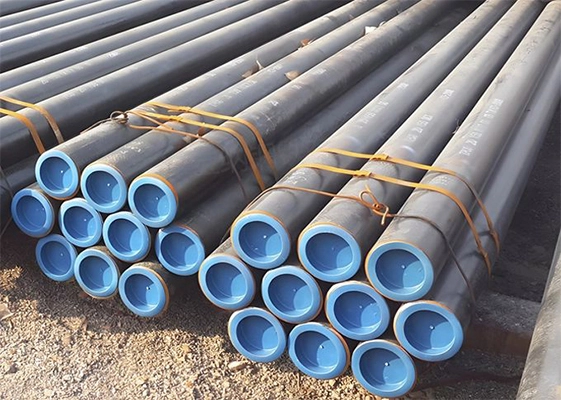
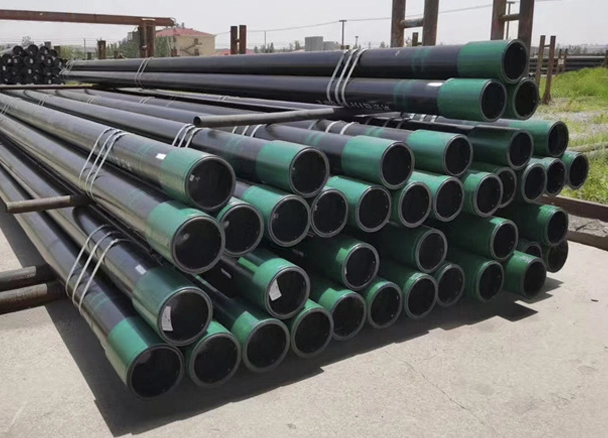
Oil Country Tubular Goods (OCTG) is the collective term for steel tubular products used in well construction and completion. The product family includes:
Casing – structural lining that holds the wellbore open and isolates formations
Tubing – the production conduit that carries fluids from reservoir to surface
Couplings – threaded connectors that join pipe joints end-to-end
Pup joints – short-length filler sections for string spacing
Accessories – float equipment, centralizers, landing collars
Well tubing and casing serve different mechanical roles. Casing handles external collapse pressure and cement loads; tubing handles internal production pressure and cyclic fatigue. Both require dimensional consistency and connection integrity—but the failure modes differ, and a supplier who performs well on one must demonstrate equal control on the other.
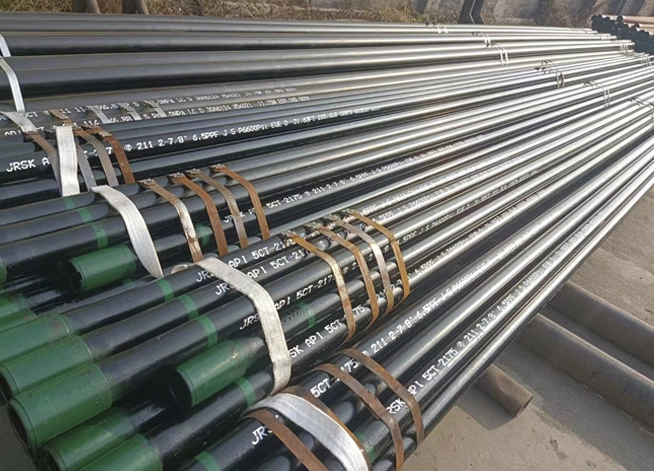
Why does manufacturer reliability matter more than unit price? Because every failure event—a leaking connection, a fishing job, a rejected lot at the rig site—costs far more in non-productive time (NPT) than any savings at the purchase order stage.
API 5CT sets the baseline: chemical composition, mechanical properties, dimensional tolerances, threading requirements, and testing protocols. A licensed OCTG manufacturer has demonstrated capability to meet these requirements under audit conditions.
What the certificate does not guarantee:
Batch-to-batch consistency in everyday production
Dimensional execution on every heat and lot
Packaging and logistics discipline
Speed and quality of corrective action when something goes wrong
1. Process Control Stable forming and heat treatment processes produce predictable mechanical properties. The question isn't whether the equipment exists—it's whether furnace uniformity, quench parameters, and tempering cycles are monitored, recorded, and controlled within defined windows.
2. Dimensional and Thread Repeatability Tolerances that pass today should pass next shipment. Gauge management, thread inspection frequency, and operator discipline determine whether this happens consistently across every lot of well tubing and casing you receive.
3. Traceability Heat number to finished pipe to shipping document. A full traceability chain means fast root-cause analysis when a field question arises—and clean documentation for your well records.
4. Fast CAPA When a non-conformance occurs, how quickly does the manufacturer contain, investigate, and correct? A 48-hour containment response is very different from a two-week email chain.
Before approving any supplier, understand which production variables directly predict whether OCTG performs in service.
Review the Mill Test Certificate (MTC/CMTR): verify heat number, chemical composition, yield/tensile/elongation, and Charpy results where specified
Ask about test frequency: one test per heat is standard—understand what triggers additional testing
For sour service (H₂S environments), confirm hardness control to HRC 22 max per NACE MR175/ISO 15156
Request furnace calibration records and uniformity survey data
For Q&T grades (L80, C90, T95, P110), verify that hardness is checked at the pipe body and coupling
Hardness scatter across a lot is a red flag—it signals furnace non-uniformity
The tolerance items most likely to cause installation problems on well tubing and casing:
OD and wall thickness – affects make-up and pressure rating
Straightness – crooked pipe causes running problems in deviated wells
Ovality – affects both running performance and connection sealing
Ask for dimensional inspection records, not just pass/fail summaries.
What gauge set is used? How often are gauges calibrated and replaced?
Is threading performed in-house or subcontracted?
Are coupling blanks sourced from a controlled supply chain?
Thread protectors: correct type, applied consistently, undamaged at shipment?
Phosphating, coating, or mill varnish: what standard, what DFT verification?
End condition: clean bore, no swarf, no standing rust on threads at shipment
A complete shipment document set for OCTG should include:
MTC/CMTR with full heat traceability
Dimensional inspection report
Thread inspection report with gauge calibration reference
NDT report (hydrostatic test minimum; UT/EMI where specified)
Packing list with bundle/heat breakdown
Third-party inspection certificate if applicable
Use this scorecard when evaluating OCTG suppliers. Request evidence in each category before approval.
| Category | Evidence to Request | Pass Indicator |
|---|---|---|
| Process Control | Furnace records, HT procedure | Defined windows, calibrated equipment |
| Thread & Gauging | Gauge calibration log, inspection frequency | Current calibration, ≥1 check per lot |
| Dimensional Inspection | Full dimensional report per lot | Records, not summaries |
| NDT Coverage | Hydro test records, UT/EMI if specified | 100% hydro minimum |
| Traceability | Heat → pipe → bundle → document | Unbroken chain, legible markings |
| Packaging | Packing standard document + photos | End protectors intact, bundle secure |
| CAPA Speed | Last 3 NCR response records | Containment ≤48 hrs |
| Lead-Time Stability | On-time delivery history | ≥95% OTD over 12 months |
| Type | What They Control | Key Risk |
|---|---|---|
| Integrated mill | Steel making through threading | Single accountable party |
| Pipe mill + outsourced threading | Body quality, limited thread control | Audit the threading shop separately |
| Trading company | Order placement, documentation | No direct process control |
A trading company can be a legitimate supply channel—but your quality assurance must reach the actual OCTG manufacturer, not stop at the trader's desk.
Equipment and calibration system
Calibrated gauges with current log entries
Heat treatment furnace with documented uniformity surveys
Hydrostatic test equipment with calibrated pressure gauges
Third-party inspection openness
Does the manufacturer allow your TPI at any production stage without advance restriction?
Are TPI reports issued directly to you, not routed through the supplier?
Consistency evidence
SPC data or process trend charts—not just final inspection pass rates
Historical NCR/rejection rates and CAPA closure times
Customer references willing to discuss delivery and quality performance
| Application | Key Supplier Requirement |
|---|---|
| Sweet service, standard program | API thread capability, dimensional consistency |
| Sour service (H₂S) | NACE compliance, hardness control, full MTC |
| High-collapse / HPHT wells | Tighter wall tolerance, premium thread option |
| Geothermal wells | Thermal fatigue resistance, semi-premium or premium connections |
| Workover / recompletion | Quick lead time, standard API dimensions, clean documentation |
Premium vs. API threads for well tubing and casing: API threads are cost-effective for standard programs. Premium connections are warranted when gas-tight integrity, high torque capacity, or deviated-well running performance justify the cost. Evaluate the tradeoff well-by-well—not as a blanket upgrade.
Oil and gas drilling and completions (primary application)
Geothermal energy wells
Underground gas storage (UGS)
Workover and well service operations
CO₂ injection and carbon capture storage (CCS)
| Benefit | Operational Impact |
|---|---|
| Consistent dimensions and threads | Faster running, fewer connection redresses |
| Low rejection rate | Reduced NPT, cleaner rig-site operations |
| Full traceability | Fast response to any field question or regulatory inquiry |
| Complete documentation | Simpler audits, cleaner well file |
| Stable lead times | Better program scheduling, lower emergency freight costs |
"Certificate is valid, but batch quality varies" Ask for dimensional and mechanical data from the last three lots produced under the same specification—not just the approval certificate. Variance across lots reveals process consistency better than any single test result.
Subcontracted threading without controls If threading is outsourced, request the threading shop's audit results and gauge calibration records. Require that your TPI rights extend to the threading location—not just the pipe mill.
Packaging and transport damage End protectors removed or crushed in transit are a leading cause of field thread rejection on OCTG. Require a packaging standard document and pre-shipment photos showing protector condition, bundle banding, and loading configuration.
Incomplete traceability during claims Establish traceability requirements before order placement: every pipe marked with heat number, grade, size, and lot reference; every bundle matched to shipping documents. A claim without traceability costs you time and money.
Lot traceability rules: heat number marking standard and verification method
Inspection plan: dimensional checks, thread inspection, NDT type and sampling rate
Gauge management records: gauge identity, calibration date, replacement criteria
Pre-shipment inspection option: third-party access, scope, and report routing
Packaging standard: protector type, banding method, loading procedure
Warranty and claims process: documented procedure + CAPA timeline commitment
On-time delivery history: last 12 months, same product family
Good supplier quality can be undone by poor site practice. Follow these steps to protect well tubing and casing from receipt through running.
Count joints and verify against packing list
Check end protectors: all present, undamaged, correctly seated
Confirm pipe markings match order: grade, heat number, size
Measure a sample for OD and weight per foot; record results
Photograph any damage before unloading from transport
Rack pipe off the ground on padded supports—never on bare rock or dirt
Maintain end protectors until thread make-up
Segregate by grade, size, and heat if lot-controlled running is required
In high-humidity environments, use vapor-barrier wrapping or covered storage
Use lifting slings at designated points; never drag pipe across hard surfaces
Keep protectors in place during all moves until the joint is positioned for make-up
Avoid impact loading—do not drop joints onto racks or other pipe
Inspect thread condition visually before each make-up
Apply thread compound per manufacturer instructions where specified: correct type, coverage, and volume
Follow specified torque values and monitor torque graph behavior during make-up
Record any connection that required redress, with reason noted
An API 5CT certificate tells you a supplier can produce OCTG. Reliability comes from what they control every day: process stability, threading discipline, inspection transparency, traceability, and fast corrective action.
Evaluate an OCTG manufacturer the way you'd evaluate a critical service contractor—with documented evidence, audit access, and performance history. The cost of a thorough supplier evaluation is trivial compared to one NPT event caused by a failed connection downhole.
Q1: Is an API 5CT certificate enough to qualify an OCTG manufacturer?
No. API 5CT certification confirms that a manufacturer passed an audit at a point in time. It does not guarantee batch-to-batch consistency, threading execution, packaging discipline, or corrective action speed. Use the certificate as the starting point for qualification—not the endpoint. Learn more about OCTG qualification standards.
Q2: What documents should I request with well tubing and casing shipments?
At minimum: MTC/CMTR with heat number, dimensional inspection report, thread inspection report with gauge calibration reference, hydrostatic test records, NDT report, packing list with heat/bundle breakdown, and TPI certificate if third-party inspection was performed. See our full well tubing and casing documentation standards.
Q3: How do I verify thread quality and gauging controls for OCTG?
Request the gauge calibration log for the specific gauges used on your order. Verify calibration dates are current and frequency meets API 5B requirements. Ask for thread inspection records showing joints inspected, acceptance/rejection results, and gauge identifiers used on your OCTG order.
Q4: What's the difference between factory production and outsourced threading—and what should I audit?
An integrated mill controls pipe body and threading under one quality system. A mill that outsources threading may have strong body quality but limited visibility into thread execution. If threading is outsourced, audit the threading shop separately: gauge management, operator qualification, inspection frequency, and your TPI access rights at that location. This applies to all well tubing and casing procurement.
Q5: How can I reduce the risk of mixed heats and lost traceability?
Establish marking and segregation requirements in your purchase order. Specify that every pipe must carry heat number and lot reference, and that every bundle must be documented against shipping records. Require a traceability map before accepting any OCTG shipment.
Q6: What are common field failures in OCTG connections and how can supplier choice prevent them?
The most common failures are: incomplete make-up due to thread form errors, galling from poor thread surface finish, and leak-path failures from coupling dimensional inconsistency. A well tubing and casing supplier with in-house threading, calibrated gauges, and documented inspection frequency significantly reduces these risks compared to one relying on unaudited subcontractors.