English
J55 tubing is one of the most recognized steel grades used in oil and gas well production strings. The grade is often selected for conventional wells where the calculated axial, internal-pressure, collapse, corrosion and temperature demands remain within an approved design envelope. However, the words “J55 tubing” do not define a complete product. A purchase order still needs size, nominal mass, wall thickness, end finish, connection, range length, product specification level, inspection, drift and documentation requirements.
This specification guide is designed for engineers, distributors, service companies and purchasing teams who need a practical way to compare offers. It explains the meaning of the grade, provides representative common dimensions, separates EUE from NUE connection choices, and shows how to prepare an RFQ that JRSK can review without relying on assumptions.
All dimensional tables in this article are representative purchasing references. API and ISO standards are revised, and individual sizes can have several nominal weights and end-finish options. The latest applicable edition, purchase specification and manufacturer data sheet should govern the final order.
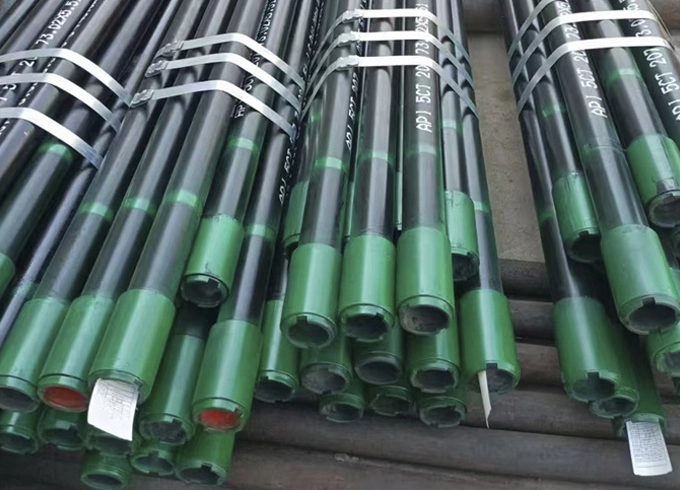
J55 tubing is an API 5CT grade of steel production tubing installed inside well casing to convey produced fluids, support downhole equipment and provide a replaceable flow conduit between the producing interval and the surface.
The “J” identifies the grade family and “55” refers to a minimum yield strength of 55,000 psi, equal to approximately 379 MPa. In common API property tables, J55 has a specified yield-strength range rather than only a single minimum value, and its minimum tensile strength is commonly listed at 75,000 psi, approximately 517 MPa. These values describe material strength requirements; they do not alone define burst, collapse or joint strength for a selected pipe size.
The performance of a tubing string depends on outside diameter, wall thickness, nominal mass, connection efficiency, internal pressure, external pressure, axial load, bending, temperature, corrosion allowance and damage factors. A 2-3/8-inch J55 tube and a 3-1/2-inch J55 tube share a grade name but have different metal area, internal capacity and mechanical performance.
Buyers can review JRSK’s J55 tubing product page for commercial options, then use the data framework in this article to prepare the technical inquiry.
API Specification 5CT and the corresponding ISO 11960 framework define technical delivery requirements for casing, tubing, pup joints, coupling stock and related materials used in wells.
As of 2026, API identifies the 11th edition of Specification 5CT as the current major edition, with an addendum published in May 2025. ISO 11960:2020 is the current ISO edition listed for steel pipes used as casing or tubing for wells. A purchase order should state the required standard and edition instead of writing only “API tubing.”
Thread form, gauging and inspection requirements are addressed through API 5B and related purchase requirements. Connection performance may also be governed by operator specifications or proprietary connection qualifications. A product can be made from J55-grade steel yet still be unsuitable if the end finish, gauge control, drift, length, marking or test documentation does not meet the order.
For a complete RFQ, state:
API 5CT or ISO 11960 edition and product specification level.
Outside diameter, nominal mass and wall thickness.
Grade J55 and any supplementary chemical or heat-treatment requirement.
End finish: EUE, NUE, plain end or another approved connection.
Range length and permitted length distribution.
Coupling requirements, thread compound, protectors and coating.
Hydrostatic, nondestructive, dimensional and drift requirements.
Mill test certificate, traceability and third-party inspection requirements.
J55 mechanical properties define the strength class of the steel, but they do not replace a tubing-string design calculation or a connection-performance review.
| Property | Representative J55 Requirement | Engineering Meaning | Important Limitation |
|---|---|---|---|
| Minimum yield strength | 55,000 psi (about 379 MPa) | Lower bound for specified material yielding | Pipe-body rating still depends on dimensions and tolerances |
| Common maximum specified yield | 80,000 psi (about 552 MPa) | Controls the grade’s yield range in common API tables | Confirm current edition and purchase specification |
| Minimum tensile strength | 75,000 psi (about 517 MPa) | Minimum ultimate tensile requirement | Does not equal connection tensile efficiency |
| Grade service concept | General-purpose OCTG grade | Often considered for conventional service | Not automatically suitable for sour, highly corrosive or high-temperature service |
Yield strength is used in calculations for pipe-body tension, internal yield and collapse models, but the design factor and actual load path remain project decisions. Connection efficiency can be lower than pipe-body strength. Thread damage, improper make-up, wall loss, ovality and temperature derating can further reduce the usable envelope.
J55 should not be selected solely because it has a lower price than N80, L80 or P110. A lower-strength grade may require a heavier wall, while a higher-strength grade may have different corrosion or sour-service implications. The economic comparison should use the entire string design, expected life and intervention cost.
J55 tubing is supplied in standardized outside diameters with multiple nominal masses, and each nominal mass corresponds to a wall thickness and internal diameter that affect capacity and strength.
The following table shows representative, widely used size-and-weight combinations. It is intended to help buyers recognize common ordering language, not to replace the controlling standard table.
| Outside Diameter | Common Nominal Mass | Approximate Metric Mass | Typical Purchasing Description | Selection Note |
|---|---|---|---|---|
| 2-3/8 in (60.3 mm) | 4.70 lb/ft | about 7.0 kg/m | 2-3/8 in, 4.70 lb/ft, J55 tubing | Compact tubing for lower flow or limited completion diameter |
| 2-7/8 in (73.0 mm) | 6.50 lb/ft | about 9.7 kg/m | 2-7/8 in, 6.50 lb/ft, J55 tubing | One of the most frequently requested production-tubing sizes |
| 3-1/2 in (88.9 mm) | 9.30 lb/ft | about 13.8 kg/m | 3-1/2 in, 9.30 lb/ft, J55 tubing | Larger internal capacity with increased string weight |
| 4-1/2 in (114.3 mm) | 12.75 lb/ft | about 19.0 kg/m | 4-1/2 in, 12.75 lb/ft, J55 tubing | Used where high flow area or completion equipment requires larger bore |
A size description should include nominal mass because outside diameter alone does not determine wall thickness. For example, two 2-7/8-inch tubes with different nominal masses will have different internal diameters, drift diameters, fluid capacities and pressure ratings. The procurement document should also define whether tolerances and mass acceptance are evaluated by individual joint, lot or shipment.
A 2-7/8 J55 tubing specification combines a 2.875-inch outside diameter with a selected nominal mass, wall thickness, grade, connection and length range.
The popular search phrase “2 7/8 J55 tubing specs” is incomplete unless the nominal mass and end finish are stated. A common purchasing line is “2-7/8 in OD × 6.50 lb/ft, J55, EUE, Range 2.” This line tells the supplier the nominal diameter, mass, grade, connection and length range, but a complete order still needs the standard edition, product level, quantity, coupling, testing, coating, protectors and documentation.
Internal capacity is important for production modeling and displacement calculations. Wall thickness affects internal diameter, and the coupling or upset can affect clearance through the casing. When downhole tools, gas-lift mandrels, pumps or plugs will pass through the tubing, the minimum drift requirement should be explicitly confirmed.
GSC data for the JRSK site shows that specific queries such as “2 3/8 j55 tubing specs,” “2 7/8 j55 tubing specs” and the broader “j55 tubing” already reach page-one or near-page-one positions. That search behavior indicates buyers and engineers want directly usable dimensions rather than a generic grade definition. The product page should therefore present a clear size table and a downloadable or requestable data sheet.
EUE and NUE are API tubing end finishes: external upset end tubing has a locally enlarged pipe end, while non-upset tubing retains the basic pipe-body outside diameter at the threaded end.
| Comparison Point | EUE Tubing | NUE Tubing |
|---|---|---|
| End geometry | Pipe end is externally upset before threading | Thread is cut on a non-upset pipe end |
| Connection strength | Generally provides higher joint efficiency for a comparable body size | May have lower connection strength depending on size and load |
| Maximum outside envelope | Larger upset and coupling outside diameter | Smaller external profile |
| Completion clearance | Requires more annular clearance through restrictions | Useful where external clearance is limited |
| Common selection driver | Connection strength and robust production service | Clearance, simpler geometry or specific completion design |
EUE is not automatically the correct answer. A completion with tight casing clearance, packer restrictions or special downhole equipment may require NUE or a proprietary slim connection. Conversely, a high axial-load design may favor EUE or another connection with verified performance. The engineer should compare connection tensile efficiency, internal pressure, external pressure, make-up requirements and clearance.
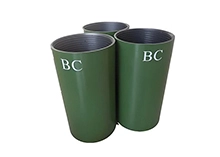
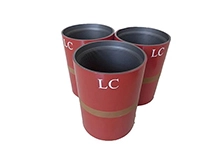
The coupling must match the tubing size, grade and connection. Buyers sourcing tubing coupling products separately should state whether the coupling is EUE or NUE, the required grade or material compatibility, thread inspection, coating, marking and traceability.
API tubing is ordered by range, which defines a permitted joint-length band rather than one exact length for every piece.
Common tubing ranges are approximately 20–24 ft for Range 1, 28–32 ft for Range 2 and 38–42 ft for Range 3. Range 2 is widely used because it balances handling, transportation and the number of connections in the string. The final purchase order should confirm the governing standard and any required average-length or distribution controls.
The number of connections matters. A string assembled from shorter joints contains more threaded connections for the same installed depth. More connections increase make-up time and the number of potential leak or handling points, although shorter joints may be necessary for rig, transport or intervention constraints.
Before shipment, each joint should be measured and listed in a tally. The tally should identify joint number, measured length and, where required, heat or traceability code. The rig team uses this information to calculate landed depth and equipment spacing. A generic packing list with only bundle count is insufficient for projects that need accurate string placement.
Internal diameter defines the nominal flow area, while drift testing verifies that a specified mandrel can pass through the full length of the tube without obstruction.
Flow capacity increases with internal diameter, but production design must consider velocity, friction, multiphase flow, scale deposition and artificial-lift equipment. Selecting a large tube only to reduce pressure loss can create liquid-loading or completion-clearance problems in some wells. Selecting a small tube only to reduce cost can increase friction and restrict intervention tools.
Drift is a practical manufacturing and acceptance requirement. A tube can meet nominal outside diameter and wall requirements yet still contain local deformation, scale or an upset transition that restricts passage. The purchase order should state the applicable drift dimension and whether full-length drifting is required.
For buyers comparing casing and tubing, the dimensional relationship is critical: tubing coupling outside diameter, upset diameter and tool envelope must fit through the casing drift and any wellhead or packer restriction.
J55 is a general-purpose strength grade, and its suitability for a well depends on the produced-fluid chemistry, temperature, partial pressures, corrosion-control program and operator requirements.
Carbon dioxide, hydrogen sulfide, chlorides, oxygen ingress, organic acids and water cut can all influence corrosion. A grade name alone does not provide a corrosion rate. Sour-service applications require a specific material and hardness strategy, qualification and environmental review. The buyer should not assume that standard J55 is acceptable for hydrogen-sulfide exposure merely because the required mechanical strength is low.
Temperature can reduce material strength and affect elastomers, thread compound and connection behavior. Scale, erosion and repeated workovers can reduce effective wall. A design for a short, sweet, low-temperature well is not transferable to a deep, hot or corrosive well without recalculation.
The RFQ should provide expected pressure, temperature, fluid composition, water chemistry, hydrogen sulfide and carbon dioxide data, planned inhibitors and design life. If the data are not yet final, state the uncertainty so that JRSK can identify which information is required before confirming the product.
A tubing connection performs as a system of pin thread, coupling thread, surface condition, compound, make-up torque or position, handling and field cleanliness.
API 5B governs standardized thread form and gauging principles for applicable API connections. Ring and plug gauges are used to verify thread dimensions, but gauge acceptance is only one part of quality. Thread profile, taper, lead, height, surface finish, crest condition and end geometry also matter.
Before shipment, threads should be clean, visually inspected, protected and compatible with the specified coupling. Phosphate or other surface treatment may be used depending on the product and purchase requirement. Thread protectors should resist transport impact and contamination. Reused or cracked protectors should not be accepted for long-distance export shipments.
At the rig, protectors should be removed only when the joint is ready for inspection and make-up. Threads should be cleaned and checked for dents, corrosion, debris and crossed starts. The correct thread compound and application quantity should be used. Connections should not be forced when alignment is poor.
A reliable J55 tubing order should be supported by traceable material, dimensional, test and inspection records that match the actual shipment.
| Document or Check | What It Should Confirm | Why It Matters |
|---|---|---|
| Mill test certificate | Heat, grade, chemistry, mechanical tests and product identification | Connects the delivered tubing to material compliance |
| Dimensional report | OD, wall, length, mass and straightness sampling | Confirms fit, capacity and tolerance control |
| Drift record | Mandrel size and successful passage | Protects tool and completion clearance |
| Hydrostatic test record | Test pressure and acceptance | Provides evidence of pressure testing under the specified procedure |
| NDT record | Method, coverage, sensitivity and disposition | Supports detection of relevant discontinuities |
| Thread inspection | Gauge status, thread acceptance and coupling match | Reduces connection and make-up risk |
| Tally and packing list | Joint lengths, bundle identification and quantity | Supports landing-depth calculation and receiving inspection |
Third-party inspection can be useful for high-value or critical orders, but the scope must be defined. “Third-party inspection required” is too vague. State whether the inspector will witness mechanical tests, review MTCs, verify dimensions, sample threads, check marking, confirm tally, inspect packing or supervise loading.
J55, N80 and L80 represent different strength and service families, so the best economic choice is the grade that satisfies the complete design and environmental requirements with appropriate margins.
| Factor | J55 | N80 | L80 |
|---|---|---|---|
| Minimum yield concept | 55 ksi class | 80 ksi class | 80 ksi class with controlled grade requirements |
| Typical purchasing role | Conventional lower-to-moderate demand wells | Higher strength than J55 for suitable environments | Often considered where controlled properties or sour-service variants are required |
| Cost tendency | Often lower, depending on size and market | Generally higher than J55 | Depends strongly on type, heat treatment and qualification |
| Main decision risk | Under-designing strength or corrosion environment | Assuming strength alone solves service issues | Failing to specify the exact L80 type and service requirement |
A grade upgrade should be justified by calculations and environment, not by a general preference for “stronger pipe.” A heavier J55 wall may compete economically with a lighter high-strength option, but the internal diameter, connection, handling weight and availability can change the result. JRSK should receive the load case and service data when a recommendation is requested.
A complete J55 tubing RFQ states the standard, dimensions, grade, end finish, length, quantity, testing and documents in one unambiguous item description.
A practical example is:
API 5CT J55 tubing, 2-7/8 in OD, 6.50 lb/ft, EUE, Range 2, seamless, with matched couplings, thread protectors, full-length drift, hydrostatic test, specified NDT, mill test certificate, joint tally, export seaworthy bundle packing, quantity ___ metric tons, delivery to ___.
The example should be edited to match the project. Add product specification level, special drift, coating, thread compound, third-party inspection, average length, marking, color bands, origin documentation and delivery schedule where necessary. If the well design has not been finalized, do not ask for a firm substitution recommendation without providing load and environment data.
For a fast technical review, send JRSK the tubing size, nominal mass, connection, grade, range, quantity, well depth, maximum pressure, maximum temperature, fluid composition, casing drift and required documents. A complete inquiry allows the quotation team to identify missing information before production rather than after order confirmation.
J55 is an API 5CT material grade whose designation corresponds to a minimum yield strength of 55,000 psi, approximately 379 MPa. It is used for casing and tubing products under defined technical-delivery requirements. The grade name does not specify pipe size, wall thickness, connection or service environment, so those items must be added to the order.
Common outside diameters include 2-3/8, 2-7/8, 3-1/2 and 4-1/2 inches. Each outside diameter can be available in more than one nominal mass and wall thickness. The RFQ should include OD, nominal mass, end finish and length range rather than size alone.
EUE tubing has externally upset ends before threading and generally provides a stronger connection envelope, but it has a larger external profile. NUE tubing is threaded on a non-upset end and can provide more external clearance. The correct choice depends on loads, casing drift, downhole restrictions and connection requirements.
Standard J55 should not be assumed suitable for sour service without a specific material and environmental evaluation. Hydrogen sulfide service can require controlled hardness, chemistry, heat treatment and qualification. The operator’s sour-service specification and current standards should govern the selection.
A typical package includes a mill test certificate, dimensional and length records, hydrostatic test evidence, nondestructive-test records, drift confirmation, thread inspection, tally, marking and packing list. The exact scope should be written into the purchase order, especially when third-party witnessing is required.
Store tubing on level supports above the ground, keep bundles identified, protect threads and avoid water or debris accumulation inside the pipe. Do not mix heats or sizes without traceability. Inspect protectors and threads before dispatch to the rig, and rotate stock if long-term outdoor storage may degrade coatings or protectors.
J55 tubing can be a cost-effective choice when its strength, dimensions, connection and environmental limits match the well design. The correct order is not “J55 tubing” alone; it is a controlled combination of outside diameter, nominal mass, wall, EUE or NUE end finish, range, testing, inspection and documentation.
Use representative tables to begin the discussion, then confirm the current API or ISO edition and the exact product data before purchase. JRSK can review a complete tubing schedule and help identify missing commercial or manufacturing information, while the well engineer confirms the final load and service suitability.
American Petroleum Institute — API Specification 5CT, 11th Edition
ISO 11960:2020 — Steel pipes for use as casing or tubing for wells
API Monogram Program Documents — API 5CT and API 5B resources

This is the last one.