English
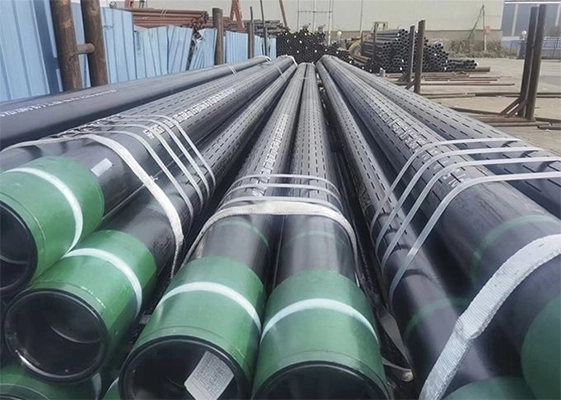
Casing coupling performance directly influences whether a casing string can maintain mechanical continuity, pressure containment, and connection reliability throughout drilling, cementing, completion, and production. A high-performance coupling is therefore not simply a threaded sleeve between two casing joints. Its material grade, thread geometry, dimensional accuracy, surface condition, make-up behaviour, inspection quality, and compatibility with the casing string must all be considered as part of the well-integrity design.
As wells become deeper, more deviated, and more demanding in terms of pressure, temperature, corrosion exposure, and installation loads, connection selection becomes increasingly important. The current API Specification 5CT framework covers technical delivery requirements for casing, tubing, pup joints, couplings, coupling stock, coupling material, and related accessory materials, reinforcing the importance of treating connections as engineered components rather than interchangeable hardware.
For drilling contractors, operators, OCTG distributors, and procurement teams, the practical objective is straightforward: the selected coupling must remain compatible with the pipe body while preserving structural and pressure integrity under the actual loads expected during installation and service.
A casing string transfers axial loads, supports the wellbore, provides pressure containment, isolates formations, and establishes a structural path between downhole sections and the wellhead. Every connection interrupts the continuous pipe body. The quality of that connection therefore affects how effectively loads are transferred from one casing joint to the next.
A properly manufactured well casing coupling provides the threaded interface required to join individual casing joints while maintaining the mechanical continuity of the string. The connection must resist tensile loading while running casing, compression during setting and cementing, internal pressure during well-control events or pressure testing, external pressure associated with collapse conditions, and additional stresses caused by bending or wellbore deviation.
Connection performance becomes more critical when several loads occur simultaneously. A casing string may experience axial tension together with internal pressure, for example, while a deviated interval introduces bending and uneven contact loads. Temperature changes can also alter axial stresses after cementing or during production.
For this reason, coupling selection should not be based solely on nominal outside diameter. Engineers need to evaluate the complete connection system, including casing grade, wall thickness, thread type, required make-up, service environment, and the load envelope expected during the well's life.
The objective is not to specify the strongest possible coupling in every project. It is to choose a connection whose mechanical properties and operating limits are appropriately matched to the casing and well design.
Casing connections operate under combinations of mechanical and pressure loads rather than one isolated force. Understanding these combinations is essential when selecting couplings for critical wells.
Axial tension is particularly important while running long casing strings. The upper sections of the string may support substantial suspended weight. A properly made-up coupling must transfer this load across the threaded connection without thread pullout, local yielding, or loss of structural continuity.
Compression may develop from casing landing, thermal expansion, cementing effects, buckling, or other downhole conditions. A connection that performs well in tension must also remain stable when axial load direction changes.
Internal pressure creates hoop stresses within the casing system and can challenge connection sealing performance. During pressure testing, stimulation, well-control operations, or production, the connection must prevent fluid migration through the threaded interface.
External pressure and collapse-related loading are also relevant. Although collapse design is often primarily associated with the pipe body, the connection remains part of the pressure-containing system and must retain dimensional and sealing stability.
Bending loads become increasingly important in directional, horizontal, and high-dogleg wells. Bending can distribute stress unevenly around the circumference of the connection, increasing local thread loading.
Make-up torque is another essential consideration. Threads must be assembled sufficiently to establish the intended interference and sealing behaviour, but excessive torque can damage threads, distort the connection, or introduce undesirable stresses.
ISO 13679:2019 specifically addresses testing intended to evaluate casing and tubing connections for characteristics including galling tendency, sealing performance, and structural integrity. This highlights why connection performance needs to be considered under realistic mechanical conditions rather than judged only from dimensions or material strength.
API casing connections commonly include Short Thread Coupling (STC), Long Thread Coupling (LTC), and Buttress Thread Coupling (BTC) configurations. Each connection type serves a different operating range, and no thread form should be treated as universally superior.
STC and LTC are round-thread connection systems, while BTC uses a buttress-style thread geometry designed to provide stronger axial load transfer for many casing applications. The appropriate choice depends on casing size, weight, grade, depth, anticipated loading, sealing requirement, and project specifications.
A useful engineering comparison is shown below.
| Connection Type | Typical Engineering Characteristic | Selection Considerations | Common Application Logic |
|---|---|---|---|
| STC | Compact round-thread connection | Moderate axial requirements, standard casing programmes | Conventional wells where approved design loads remain within connection capacity |
| LTC | Longer thread engagement than STC | Improved load transfer compared with shorter round-thread configurations | Deeper or more demanding casing programmes requiring additional thread engagement |
| BTC | Buttress thread geometry | High axial loading and stronger structural load transfer | Deeper wells, heavier strings, and applications where higher tensile performance is required |
| Premium / proprietary connection | Engineered thread and seal geometry | Gas-tight sealing, HPHT, critical pressure integrity, demanding load envelopes | Complex wells where API connection performance alone does not satisfy project requirements |
The table should be treated as a selection framework rather than a substitute for connection ratings. Actual connection capacity must be verified against the current standard, manufacturer data, approved casing design, and applicable project requirements.
Thread geometry affects more than tensile capacity. It also influences load distribution, make-up behaviour, resistance to thread jump, galling sensitivity, and the ability of the connection to maintain sealing under combined loads.
Operators should therefore avoid selecting STC, LTC, or BTC solely because a particular connection was used successfully in another field. Changes in depth, casing weight, well deviation, temperature, pressure, or material grade can substantially change the required performance envelope.
Material compatibility between the coupling and the casing body is fundamental to connection reliability.
API 5CT includes multiple casing grades used across different well environments, including J55, K55, N80, L80, P110, and higher-strength grades. Each grade provides a different balance of yield strength, tensile properties, heat-treatment requirements, and suitability for particular operating environments. The current API framework also addresses couplings and coupling materials as part of the technical delivery system for casing and tubing products.
A common procurement mistake is to focus heavily on casing grade while treating the coupling as a secondary accessory. In reality, an incorrectly matched coupling can create a weaker or less predictable point within the string.
For example, higher-strength casing selected for a deep, heavily loaded well requires a connection system capable of transferring the intended axial load. Conversely, specifying very high-strength material without considering environmental compatibility can create different risks.
This becomes particularly important in sour-service wells.
Hydrogen sulfide exposure can contribute to sulfide stress cracking and other hydrogen-related damage mechanisms. ISO 15156 provides requirements and recommendations for selecting metallic materials used in H2S-containing oil and gas production environments and specifically addresses cracking mechanisms associated with sour conditions.
Consequently, casing and coupling procurement for sour service should include more than the material grade designation. The specification may need to address hardness, heat treatment, chemical composition, environmental limits, material qualification, and other requirements applicable to the approved sour-service design.
The same principle applies to corrosive environments involving CO2, chlorides, high temperature, or combinations of aggressive downhole conditions. Connection material should be assessed as part of the complete tubular system rather than independently.
Casing pup joints perform a different function from couplings, but the two components often work together within the same well-construction system.
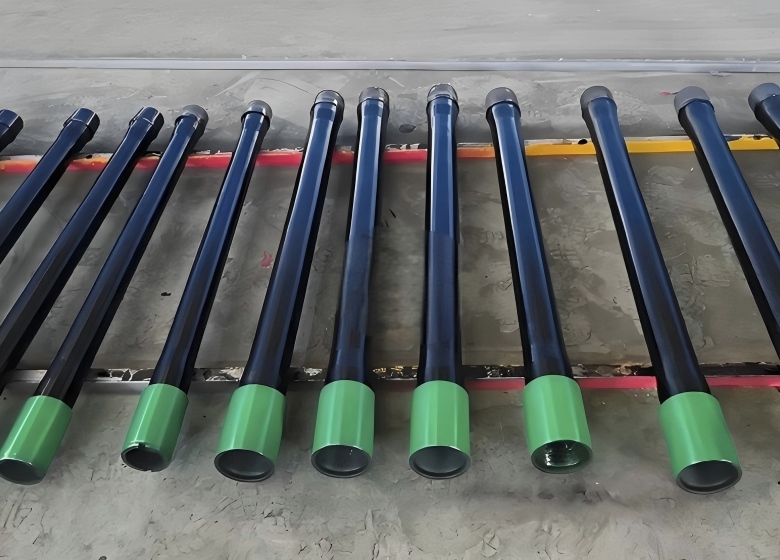
A casing pup joint is a short section of casing used when the required string length cannot be achieved efficiently using standard full-length casing joints alone. It allows the casing string to be adjusted to achieve the required landing depth, wellhead spacing, equipment position, or completion configuration.
JRSK supplies casing pup joints in multiple grades and lengths. Its current product information identifies typical casing pup-joint lengths from 2 to 12 ft and grades including J55, K55, N80, N80Q, L80, and P110.
The important engineering principle is that introducing a shorter tubular section should not introduce an uncontrolled change in the connection system.
A casing pup joint should therefore be checked for compatibility with the adjoining casing in terms of outside diameter, wall thickness or weight, material grade, thread type, connection dimensions, and required service performance. The end connections must also be protected and inspected with the same attention applied to standard casing joints.
Pup joints become particularly useful when precise string positioning is required near the wellhead or when engineering teams need to compensate for differences between standard casing lengths and the final design depth.
However, a pup joint should not be treated as an improvised spacer. It is a pressure-containing, load-carrying tubular component and should be specified accordingly.
For procurement teams ordering casing couplings and casing pup joints together, maintaining traceability across grade, heat treatment, thread specification, inspection documentation, and marking can help reduce compatibility problems during field assembly.
Casing coupling reliability starts well before the connection reaches the rig.
Material control, machining accuracy, thread inspection, heat treatment, surface preparation, marking, and protection all influence whether the finished coupling can perform as intended.
The mechanical properties of coupling stock need to satisfy the applicable specification and purchase requirements. Heat treatment becomes particularly important for grades where controlled strength, hardness, and toughness are required.
Incorrect heat treatment can create several problems. Excessive hardness may be undesirable in some corrosive environments, while insufficient strength can limit structural performance. Variability across the coupling can also affect how the connection responds under load.
Material traceability should therefore connect the finished coupling to the relevant heat, manufacturing record, inspection results, and certification documentation.
Connection performance depends heavily on accurate thread geometry.
Taper, pitch, lead, thread height, thread profile, coupling dimensions, and other controlled characteristics influence how the pin and coupling engage during make-up. Even when the steel grade is correct, machining errors can result in uneven load distribution, incomplete engagement, excessive interference, poor sealing behaviour, or assembly difficulties.
An octg coupling should consequently be evaluated as a precision-machined connection component rather than a simple piece of threaded steel.
Thread gauging and dimensional verification are essential because small geometric deviations can become significant once the connection is subjected to high axial loading and pressure.
Coupling threads are vulnerable between manufacture and final installation.
Corrosion, impact damage, embedded debris, damaged thread crests, or contaminated storage compound can interfere with make-up. Thread protectors are therefore important during handling, shipment, and storage.
Surface treatment and appropriate thread compounds may also help control friction and reduce the risk of galling during assembly, subject to the approved connection procedure.
Inspection programmes vary according to product specification, grade, project requirements, and connection type. Depending on the application, quality control may include dimensional inspection, visual examination, hardness verification, NDE, thread gauging, and review of material certification.
API's recent updates to Specification 5CT have included strengthened inspection and manufacturing requirements as industry expectations for casing and tubing integrity continue to develop.
The most important procurement principle is therefore not simply to request an “API coupling.” The purchase specification should define the applicable standard edition, product grade, thread configuration, size, inspection level, documentation requirements, marking, and any additional project-specific requirements.
Many connection failures cannot be attributed to one single factor. They often result from interaction between manufacturing condition, handling, installation practice, and actual well loads.
Thread damage during transportation is one common source of problems. A connection that has suffered impact damage may still appear usable during a rapid visual check, yet damaged lead threads can interfere with alignment and make-up.
Cross-threading creates another significant risk. If the casing joint enters the coupling incorrectly, continuing to rotate the connection can permanently damage thread geometry.
Incorrect make-up is equally important. Under make-up may prevent the connection from reaching the intended engagement condition, while excessive make-up can create thread damage or excessive stresses. Field crews should follow the applicable running procedure rather than relying on visual judgement alone.
Galling is especially important where metal surfaces experience high contact pressure and sliding during assembly. Connection testing standards such as ISO 13679 include galling evaluation because surface damage during repeated make-and-break cycles can affect subsequent connection performance.
Other failure contributors include incorrect thread compound, contamination, mixing incompatible connection types, wrong grade selection, poor storage, corrosion, inadequate inspection, and unanticipated combined loading.
Deviated and horizontal wells create additional concerns because bending can change circumferential load distribution at the connection. Deep wells can increase axial loads, while HPHT conditions introduce thermal effects and pressure demands that should be reflected in the casing design.
Rather than treating a failed coupling as an isolated defective component, root-cause investigation should evaluate the complete connection history: material, machining, transportation, storage, field inspection, stabbing, make-up, actual loads, and service environment.
A practical casing-coupling specification should start with the well design rather than with the supplier catalogue.
The engineering team should identify the casing size and weight, material grade, connection family, setting depth, anticipated axial load, pressure conditions, temperature range, well trajectory, fluid environment, and relevant design factors.
The procurement specification can then translate those engineering conditions into measurable product requirements.
| Specification Item | Information to Define | Why It Matters |
| Casing OD | Nominal casing size | Ensures physical and thread compatibility |
| Casing weight / wall thickness | Required pipe weight or wall | Affects pipe and connection loading |
| Material grade | J55, K55, N80, L80, P110 or approved alternative | Determines mechanical and environmental performance |
| Connection type | STC, LTC, BTC or approved premium connection | Determines thread engagement and connection performance |
| Applicable standard | Current approved API/ISO/project specification | Establishes manufacturing and inspection requirements |
| Service environment | Sweet, sour, CO2-containing, high-temperature or other | Influences material and qualification requirements |
| Design loads | Tension, compression, internal/external pressure and bending | Defines required connection performance envelope |
| Inspection | Gauging, dimensional checks, NDE and project-specific inspection | Reduces manufacturing and handling risks |
| Documentation | MTR/MTC, traceability and inspection records | Supports verification and quality control |
| Thread protection | Protectors, storage and shipping requirements | Prevents damage before running |
| Quantity and spares | Installation quantity plus contingency | Reduces operational delays caused by damaged components |
This information should be reviewed together. Selecting grade first and thread type later can lead to a fragmented design process.
For critical wells, operators may also require connection performance validation beyond basic dimensional compliance. ISO 13679, for example, provides procedures for evaluating sealing and structural performance of casing and tubing connections under defined test conditions.
JRSK manufactures casing, tubing, couplings, pup joints, slotted liner, seamless steel pipe, and related OCTG products for international oil and gas projects. According to its current company information, JRSK is API 5CT certified and has annual production capacity approaching 200,000 tons, with products supplied to markets including North America, South America, the Middle East, Southeast Asia, Africa, and other regions.
For casing-coupling procurement, the advantage of sourcing related tubular components through an integrated OCTG manufacturer is the ability to coordinate casing grade, dimensions, thread configuration, coupling requirements, and pup-joint specifications within the same purchasing programme.
JRSK currently offers casing coupling solutions across commonly used API casing grades and connection configurations, including J55, N80, L80, and P110 options. Its casing pup-joint range can also be supplied in multiple grades and standard lengths to support casing-string length adjustment.
For project enquiries, buyers should provide more than a product name. Casing OD, weight, grade, thread type, quantity, required standard, service environment, inspection requirement, and destination should be included whenever possible. More complete technical information allows the supplier to confirm compatibility earlier and reduces the likelihood of specification changes after production begins.
A casing coupling joins two externally threaded casing joints and transfers mechanical loads across the connection while helping maintain the pressure integrity and structural continuity of the casing string. It must remain compatible with the casing size, grade, thread configuration, and intended operating conditions.
STC and LTC are round-thread casing connections with different thread engagement characteristics, while BTC uses a buttress-style thread geometry. BTC is commonly selected where greater axial load-transfer capability is required. Final selection should be based on the approved casing design and the actual connection ratings for the specified size, weight, and grade.
The coupling material and mechanical properties must be compatible with the connected casing and satisfy the applicable specification. Exact requirements depend on the casing grade, connection, standard, service environment, and purchase specification. Buyers should avoid substituting coupling grades without engineering review.
API dimensional or material compliance alone does not automatically establish suitability for every sour environment. H2S-containing conditions require evaluation of material susceptibility to sulfide stress cracking and related mechanisms. ISO 15156 and the applicable project requirements should be considered when selecting materials for sour service.
Field inspection should verify identification, thread condition, cleanliness, protectors, visible damage, corrosion, correct connection type, and compatibility with the casing being run. The crew should also confirm that approved handling, thread compound, stabbing, and make-up procedures are being followed.
A useful RFQ should include casing OD, weight or wall thickness, material grade, thread type, applicable API or project standard, quantity, required inspection and documentation, sour-service or other environmental requirements, packaging requirements, and delivery destination. If pup joints are also needed, their lengths, grade, connection type, and quantities should be specified separately.
Structural integrity in well construction depends on more than casing body strength. Every casing coupling becomes part of the mechanical and pressure-containing path of the casing string, which makes connection quality, material compatibility, thread accuracy, make-up control, and inspection essential to long-term well performance.
Engineers should select casing couplings by considering the complete load environment: axial tension and compression, internal and external pressure, bending, installation torque, temperature, corrosion exposure, and the interaction between these conditions. STC, LTC, BTC, and premium connections each have appropriate operating ranges, and the correct choice depends on the specific well design rather than a universal preference.
Material grade, thread configuration, coupling manufacture, field handling, and casing pup-joint compatibility should also be coordinated within one OCTG specification. For sour or otherwise aggressive wells, environmental material requirements deserve the same attention as mechanical strength.
By integrating casing, coupling, and pup-joint requirements from the beginning of the procurement process, operators can reduce compatibility problems, installation delays, connection damage, and unnecessary well-integrity risk. JRSK supports this approach by supplying API 5CT casing, couplings, pup joints, and related OCTG products for a broad range of drilling and well-construction requirements.