English
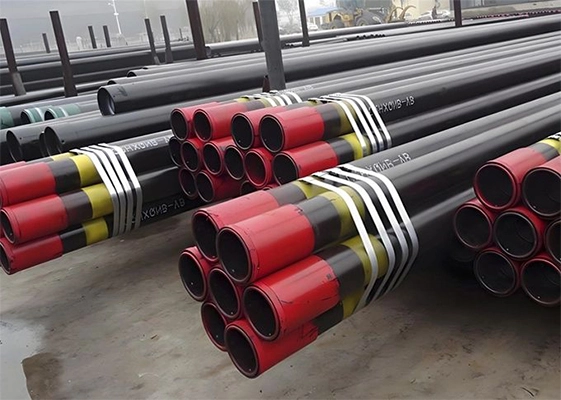
API 5CT (American Petroleum Institute Specification 5CT) is an international standard that specifies the technical requirements for OCTG (Oil Country Tubular Goods), including casing pipes, tubing, and couplings used in oil and gas wells. This standard ensures the quality, performance, and safety of steel pipes, such as API 5CT tubing, under high-pressure, corrosive, and extreme temperature conditions in drilling operations.
API 5CT defines material grades (e.g., H40, J55, K55, N80, L80, P110), dimensions, mechanical properties, and testing methods to ensure compliance with industry requirements.
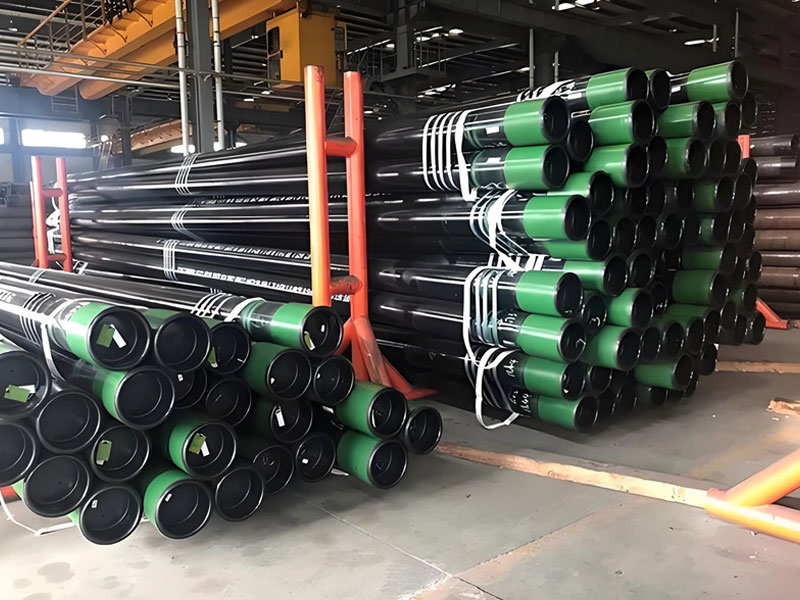
Casing pipes are critical in oil and gas well construction, serving multiple functions:
Wellbore Stability: Prevents the collapse of the drilled hole and isolates unstable formations.
Pressure & Fluid Containment: Seals off high-pressure zones and prevents fluid migration between geological layers.
Corrosion & Wear Protection: Shields the well from corrosive fluids and abrasive formations.
Production Tubing Support: Provides a secure pathway for production tubing and downhole equipment.
Casing pipes are installed in sections (conductor, surface, intermediate, and production casing) and cemented in place to ensure structural integrity.
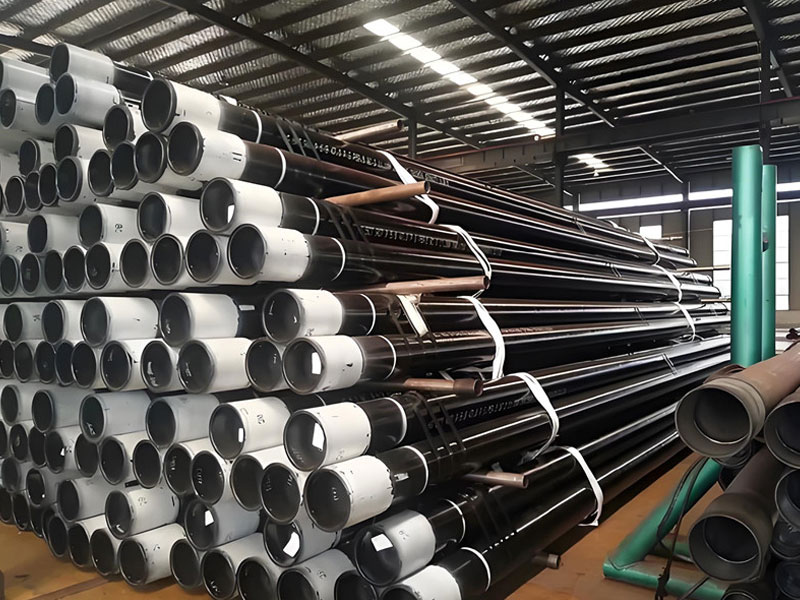
The manufacturing process of API 5CT casing pipes begins with selecting high-quality carbon/alloy steel billets, melted and cast into round billets. For seamless pipes, billets are heated, pierced, and elongated via mandrel or plug milling. Welded pipes (ERW/LSAW) are formed by rolling steel plates into cylinders and welding seams. Heat treatment (quenching, tempering, or normalizing) enhances mechanical properties based on grade (e.g., N80, P110). Pipes then undergo machining for threading (API Round, BTC, etc.) and coupling attachment. Rigorous testing follows, including hydrostatic pressure checks, ultrasonic/EMI inspection, and hardness tests. Finally, anti-corrosion coatings are applied, and pipes are stamped with API 5CT markings for certification. This ensures compliance with strength, durability, and safety standards for oilfield use.

This is the first one.